

How to Write an SEO Headline
Headlines are lifelines to your readers. They grab attention, build trust, and help time-pressed consumers focus on the stories they care most about.
Implementing SEO best practices is essential to growing your audience, driving traffic from search engines, and promoting your business or content. One of the key components to practicing good on-page optimization tactics is writing strong headlines for your pages.
Your headlines should be short, sweet, and to the point. This can be tough to format in the most effective way possible and cater to your wide audience. That’s where we can help you!
What’s the Difference Between a Title Tag and an H1?
Before we dive into crafting strategic headlines, let’s go over the different elements that affect SEO headlines:
- H1 (Header 1) tags: These are the top-level header HTML tags. On most websites, the headline is coded in an H1 tag.
- Title Tags: These are the blue links that appear in the search engine results page.

* Title Tag
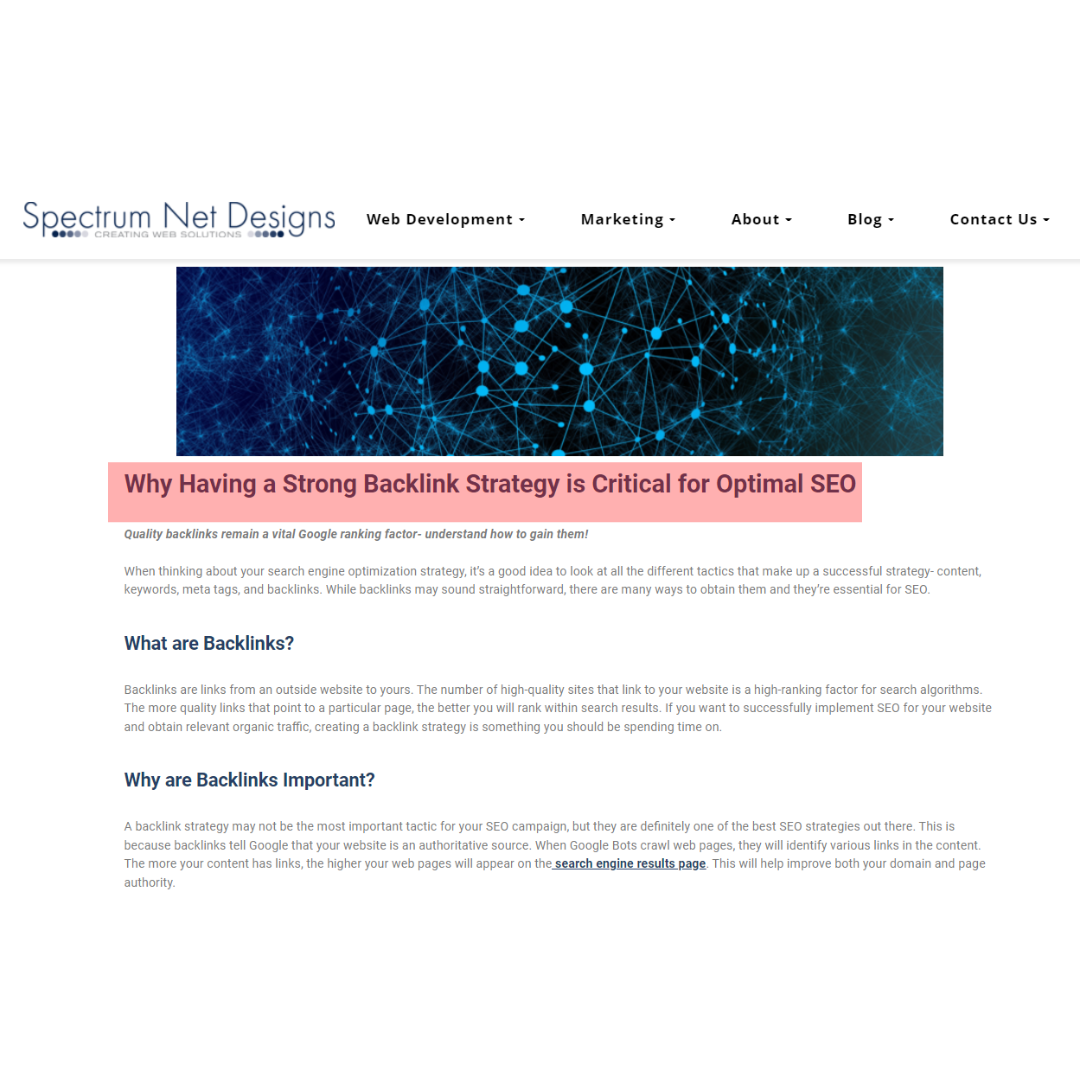
*Headline (H1)
Sites typically use the same text for the H1 and the Title Tag on an article or blog post. However, it is important to keep in mind that these are two different things that are controlled in two different places on a page. In this blog, we are aiming to help you write headlines that can easily work as the H1 and the title tag for your articles.
While it is often okay to reuse your H1 as your title tag, sometimes you might face some challenges.
- Your headline that appears on your content (H1) might be too long for a title tag.
- Typically, it makes sense to add a keyword in the title tag somewhere different than the H1. For example, if your target keyword appears at the end of your headline, you might want to rewrite the headline for your title tag to start with the keyword. This is mainly done because search engines consider words furthest to the left in the title tag to be most important.
- You must keep both humans and search engines in mind when writing your title tag and H1.
The H1 of your content may contain keywords or formatting that could help you rank higher; title tags are what get potential readers from their results page to your site. If you keyword stuff your SEO headline to boost your rankings, you’re more than likely to chase away your audience by obvious stuffing or being too aggressive about the topic. That being said, it’s important when writing your SEO headlines that you write them for both your audience and search engines.
5 Easy Steps to Optimize Your SEO Headlines
Now that you understand the power behind a strong SEO headline, let’s go over some easy steps to use when writing your SEO headline.
- Keep Character Count in Mind
- Avoid Keyword Stuffing
- Be Concise & Clear
- Use Attention-Grabbing Vocabulary
- Ensure Consistency Between Your Title Tag & Content
Keep Character Count in Mind
The visibility of your title tag on search engines is limited to 50-60 characters, so keep that in mind when creating your SEO headline. You are not only ensuring that the search engine users can see the whole topic from their result pages, but you’re also demonstrating to readers that you’re aware and taking action toward their ease of access.
Check out the Moz Title Tag Preview Tool to see how your title tag will appear on Google.
Avoid Keyword Stuffing
Even though it might seem like a good idea to include your keyword or keyword phrase in your SEO headline multiple times, and it would help your rankings, you’re more likely to irritate or turn your audience away by doing so. With limited visibility of characters for your title tag, do your best to please both your audience and search engines with your keyword quantity.
Be Concise & Clear
This is another important step when creating your SEO headline. Use these questions to help determine whether your title tag is clear and “user-friendly” enough for your audience.
- Can my headline be skimmed easily?
- Is my keyword somewhere within the first or last three words of my headline?
- Would a 10-year-old be able to understand what my headline is saying?
Is my headline longer than 90 characters? - Are there grammar errors in my headline?
- Am I using unnecessarily big words?
Use Attention-Grabbing Vocabulary
There is no need to use big fancy words for your SEO headline to impress or capture your audience’s attention- you just have to use words that will resonate with them. Words like: Boost, Easy, Free, Important, Limited
Ensure Consistency Between Your Title Tag & Content
Lastly, make sure that your SEO headline matches what you cover in your content. If your title tag does not match what they are about to read, you risk losing the trust of potential customers.
We hope this insight helps you when you are crafting your next SEO headline. Remember to write for both your audience and Google, keep character count in mind, avoid repetitive use of your keyword or keyphrase, and keep it concise and clear.
If You’d Like Some Help with Your Current SEO Strategy- Contact Our Marketing Department Today!