Marketing Archives | Page 2 of 3 | Spectrum Net Designs

What is a Lead Generation Campaign?

What is a lead generation campaign

Digital Marketing: All About Lead Generation Campaigns

Lead generation is the process of generating interest and demand in a company’s brand, products, or services using inbound and outbound marketing strategies, such as online advertising and email marketing. Running a lead generation campaign is an essential process for business-to-business (B2B) and business-to-consumer (B2C) companies for many reasons.

When you run a lead generation campaign you are trying to convince your audience to give you their personal information (usually in the form of their email or phone number) in exchange for something from you in return- either valuable content, information, research, a free trial, a product, or something else they might want or need.

From there, you will have the ability to reach out to that person again and continue to nurture them in the hopes that they will one day become a customer.

When creating a lead generation campaign, you’ll want a few things in place first, including a clear objective, a clearly defined audience, your content or offer, a budget, measurement, and a nurture plan.

Benefits of a Lead Generation Campaign

Lead Generation Supports Healthy Business Growth

Without obtaining qualified leads, your company will not be able to grow. While you may receive referrals, those often are not sustainable enough to grow your business the way you want. To be successful, you will want to attract and convert prospects, and you will do that with a lead generation marketing campaign.

Lead Generation Attracts Qualified Leads

Next, lead generation will offer you a solution to finding qualified leads, versus any other lead. You do have other strategies to help with leads like cold-calling potential leads, this type of strategy rarely results in a lead- only unhappy people with a bad image of your brand.

Lead Generation Offers a Natural Transition from Consumer to Customer

With a lead generation campaign, your business can provide a seamless journey for your customers. People can move at their own pace from consumer to customer, for instance, by first downloading an online guide or completing a contact form.

Types of Qualified Leads

Marketing Qualified Lead (MQL)-

These are contacts who have engaged with your marketing team’s content but aren’t quite ready for a sales call. This type of lead is a contact who fills out a landing page form for an offer, signs up for newsletters, interacts with your social accounts, etc.

Sales Qualified Lead (SQL)-

These are contacts who have taken actions that explicitly indicate interest in becoming a paying customer. An SQL could be a contact who fills out a form to ask a question regarding your service or products.

Product Qualified Lead (PQL)-

These leads are contacts who have used your products or services and taken additional action that indicates interest in becoming a paying customer. PQLs are present for companies that offer a product trial or a free/limited version of their product, with options to upgrade down the road. This is where your sales team comes in to help convert them into longer-lasting paying customers.

Service Qualified Lead-

These are contacts who have indicated to your service team that they’re interested in moving forward to become a paying customer.

10-Step Lead Generation Plan for a Successful Campaign

  1. Establish a Clear Objective- How many leads are you looking for? What is your cost per lead goal? In what timeframe do you need to be successful?
  2. Research Your Audience- Who is the best customer for your business? Are you testing and researching to try and expand this pool?
  3. Plan Your Content- What type of content does your customer like? Free trial? A discount of offer of some type?
  4. Create an Offer- Get creative with your content.
  5. Promote Your Content- Be strategic with chosen avenues you promote on. Where are you utilizing your budget? And where does your campaign perform best?
  6. Optimize Your Lead Capture- It’s crucial that you measure performance as your go.
  7. Test- If something isn’t working, adapt and try something new
  8. Lead Score- Not all leads are created equal. Develop a strategy to understand the quality of leads and who is worth nurturing and following up with.
  9. Nurture- Keep the relationship warm with the leads you know are quality to your business.
  10. Close Deals

There is no need to be intimidated by a lead generation campaign. They aren’t as complicated to implement or to understand as you think. It’s all about defining your company effectively and your brand message, followed by creating intriguing content that showcases your knowledge and expertise to entice customers to provide their information.


If you are looking to spice up your current marketing strategy- Contact Spectrum Net Designs. Our marketing team would love to learn more about your goals to see if there’s room for us to add value to your strategy!

How to Optimize for Voice Search

voice search optimization

How to Optimize for Voice Search

The allure of voice search is undeniable- it’s faster, hands-free, and lets you multitask.

Voice search had made its appearance in the mainstream in 2011 with the launch of Apple’s Siri on the iPhone 4. In 2015, the Amazon Echo became one of the first established smart home devices. From there on, several competitors entered the voice search market.

By now, you have been exposed to at least one of these products and understand that the growth of the audio market has created many opportunities for your brand to connect with users, especially in e-commerce.

What is Voice Search?

Voice search is the action of using speech to ask questions or give commands to compatible devices like smartphones or smart speakers. The searcher speaks into the device, and the device fulfills the command or answers the question.

How Does Voice Search Work ​

Without getting too technical, digital voice assistants work by:

  • Processing and transcribing human speech into text.
  • Analyzing the given speech to detect questions or commands.
  • Connecting to external data sources, such as search engines, to find the relevant and sought-after information.

  • Translating that information into a digestible format to fulfill the given question or command.

As voice search evolves from voice recognition to voice understanding, Google gets closer and closer to its aim to transform voice search into an ultimate mobile assistant that helps you with your daily life so that you can focus on the things that matter.

If you haven’t started thinking about incorporating voice search into your SEO strategy, now is the time. Let’s look at some strategies that will take you into 2022 and beyond.

Strategies for Voice Search Optimization Success

At the voice search optimization core, it is similar to the SEO of today, but with a refined focus.

#1 Understand Your Customer and Their Preferred Device Type

Since the voice search algorithms utilize data, location, and several other data points to understand search context, marketers must dig deeper into understanding their consumer and their behavior.

#2 Focus on Conversational Keywords

We don’t believe that short-tail keywords will ever disappear entirely, but they do become less relevant when we consider the natural phrases used in voice searches. When optimizing for voice search, it’s more important than ever to focus attention on conversational long-tail keywords. Come up with a list of questions that your product or service answers and incorporate those questions into your long-tail research to capture the voice search audience.

#3 Create Persona-Based Content

Brevity, context, and relevance are critical to master when optimizing for voice search. Something different from your usual SEO practices is that now you need to also pay special attention to:

  • Creating detailed answers to common questions.
  • Answering simple questions concisely and clearly

Aim to create rich, compelling content that answers the questions that your users are searching for. A proven strategy that many websites have begun to adopt is to:

  • Create content or a webpage with a headline that asks a common question from your audience.
  • Immediately after the H1, provide a very concise definition of the question.
  • Use the rest of your page, after answering the question, to provide further elaborative detail on the topic.

The great thing about this strategy is that the rich, elaborative webpage has everything that Google is looking for to rank your page. On the other end of this strategy, the short-and-sweet information at the top will be optimized for voice search and has the potential to become a featured snippet.

#4 Build Pages that Answer FAQ

Typically, voice searches begin with “Who,” “What,” “Where,” “When,” “Why,” and “How.” Voice searchers are looking for answers that fulfill an immediate need. Think about answering these queries and making an FAQ page, and begin each question with those adverbs. When doing something like this, try your best to answer them in a conversational tone to help appeal to the voice search inquiries.

From a performance perspective, make sure that your website is technically sound and includes some schema. Ensure your navigation and informational structure are easy to find, and your page speed is fast.

#5 Think Local & Think Mobile

We already know this; we are moving to a mobile-first world where devices and people are mobile. Because of this, it is important to remember that mobile and local go hand in hand, especially for voice search. Mobile devices allow their users to perform on-the-go local queries. In turn, voice search enables users to ask hyper-local questions.

Make sure things like directions to your location and XML sitemaps are readable to visitors and search engines on your website. You can also create different experiences for desktop and mobile users- i.e., optimize for “near me” type searches on mobile. Lastly, focus on your mobile strategy and make it sound as well as keep page speed and load times top of mind.

Wrapping Up!

Not everyone is ready to move forward with voice search optimization, as many who grew up in an age where technology wasn’t talking back to them still have a stigma attached to talking to phones. But the younger generations do not have the same hesitation, and most feel confident using voice search. Voice search is clearly on the rise, and marketers must start to become familiar with voice search optimization and best practices.

If You Are Looking for Assistance with Your SEO Strategy- Contact Spectrum Net Designs!

We support many clients, in various industries, and their SEO efforts. Let us help your 2022 marketing strategy be the strongest one yet!

Connect With Us

Facebook
Twitter
YouTube
Pinterest
LinkedIn
Instagram

Categories

Recent Posts

Archives

Are You Thinking About Your 2022 Marketing Strategy? You Should Be!

2022 Marketing Strategy

Are You Thinking About Your 2022 Marketing Strategy? You Should Be!

In the B2C world, both in-person and online shopping are seeing increases in their respective numbers. The challenge marketers are facing is to manage to think on their feet as trends begin, change, and quickly fade away. Fortunately, with our experience of observations from 2020 and 2021, we can create a solid 2022 marketing strategy that will take everything into account. Trial and error through 2020 and the first part of 2021 has given an advantage to marketers and a good grasp on what to keep, what to change out, and what tactics to start implementing in a new strategy.

Social Media Strategy for 2022

One area that continues to be dependable for a solid ROI is social media. Some insight from the first quarter of 2021 provides a good indication that social media will be in your “keep” and “change” column for your 2022 marketing strategy. What is interesting enough is that the biggest boom in activity wasn’t where most expected it to be. Of course, social media is in the keep column, but you also might want to look into tweaking a couple of things regarding your social media marketing outreach.

For instance, Pinterest is now attracting up to 5 billion searches a month. This isn’t just searches for décor inspiration, either. People were searching for actual products on Pinterest at a rate of 20x higher than the previous year. This is an increase of 150% from their average 2 billion searches a month in 2016. We suggest searching Pinterest with queries that are related to your specific industry and see what comes up. Are you competitors there? What type of content do you see? This is a great first step to see if Pinterest is the right avenue for you.

2022 marketing strategy

Facebook is still the most visited social media site, but TikTok has become a major platform for influencer marketers. The popularity of this platform happened so fast that in the beginning of 2020, TikTok influencer marketing wasn’t even an option and often fell under the “other” category. Over half of B2B marketers in the U.S. are now using Instagram, which is up from 30% in 2020. The platform actually did see its biggest decline in influencer marketers, down from 80% last year to 68% this year.

Experiential Marketing Strategy for 2022

We have come to the conclusion that virtual events are probably here to stay, for at least the foreseeable future. Brands have invested time and money into the increased technology that is necessary to help bring consumers together for various events on digital platforms. And the great news is that it actually worked! The majority of companies have noticed the same or greater attendance for virtual events than they’d previously expected for live events.

Since companies have been investing so much in technology that is necessary for virtual events, many organizations are likely to create hybrid events, with parts of the agenda that are accessible online. Incorporating a hybrid approach could involve the audience attending virtually or the speaker, or a mix of the two.

If you continue to host more virtual events, there will be a need for an on-demand strategy. Whether it’s a recording of your event that already occurred or a curated curriculum of courses, speeches, or other events made available to your audience. By creating a 2022 marketing strategy for live and hybrid events, you’re allowing the option for remote viewing to those who may not be comfortable with in-person activities or simply can’t make the trip to the event. Some statistics show that at least 20% of attendance at events comes from the on-demand viewing option. You don’t want to miss out on the opportunity to cast your net to your full audience.

Seamless Multi-Channel Retail Experiences

As more and more companies adopt a permanent work-from-home policy and consumers revel in the convenience of in-home streaming, finding new creative ways to reach buyers is more important than ever. Buyers love and take advantage of a multi-channel experience, but 90% of them say that incorporating a seamless experience is where they are most likely to spend their money. Your in-store, online, in-app, and out-of-home advertising should all cohesively work together to identify your buyer, understand where they are in their buyer’s journey, and help persuade them to complete a purchase without skipping a beat between your various channels.

When many hear the words multi-channel, they think of a website, social media, and an app all working together seamlessly. Of course, that is very important to a healthy multi-channel strategy, but that is not all you should be focusing on anymore. Also consider the entertainment streaming services. This will provide another avenue for you to potentially reach new customers. Traditional ads might become a thing of the past, but Hulu has introduced interactive ads that will provide an even richer experience for prospects who have already expressed interest in what you sell.

Another option is to consider making the most out of your out-of-home advertising strategy. You might think that billboards and bus signs are an expired tactic- a relic of the past that can’t possibly generate business. But there is a reason why out-of-home advertising is no longer called “traditional”. With the increasing availability through consumers’ cell phones, tablets, and other wearable technology, marketers are now more than ever able to change how to utilize out-of-home messaging that can reach their buyers. Nowadays, digital billboards can sync with a website that was viewed previously, there is nothing more omni-channel than that!

While it may seem impossible to completely predict the future and guarantee the results of these suggestions, you can plan for uncertainty by building out agile marketing plans and a comprehensive budget. If we have learned anything over the last 2 years, it’s that agile marketers are finding ample growth by testing new avenues and building a flexible marketing plan. By preparing to grow your brand’s reach through smart approaches to digital – there are some risks – but no doubt that marketers will be better prepared for whatever 2022 may bring! 

If You Are Looking for Any Help With Your Current or Future Marketing Strategies- Please Feel Free to Contact The Spectrum Net Designs Team for A Free Consultation! 

Connect With Us

Facebook
Twitter
YouTube
Pinterest
LinkedIn
Instagram

Categories

Recent Posts

Archives

Local vs National Marketing Strategy- Do You Understand The Difference?

local vs national marketing

Local vs National Marketing Strategy- Understand the Difference!

When deciding on utilizing a local vs national marketing strategy, it will be influenced by two key factors: the size of your company and your target market. If your target market consists of the local population, the strategy you will employ is different from that of a national corporation. What are these differences? Let’s explore the differences between a local vs national marketing strategy. ­­
Social Media Marketing

One of the first differences is the use of social media marketing for both local and national marketing strategies. Today, social media platforms like Facebook and Instagram have become valuable marketing tools. Depending on the audience you are trying to reach, these services should be used differently.

Local Social Media Strategy

If your audience is in the local population, you are capable to use social media more interactively. This is because the responses are generally limited. Strive to make local references in your posts, as this will catch the attention of the local consumers. If there are newsworthy events happening in your area, also try to reference these in your posts in increase engagement. There are about 40% of local businesses that are utilizing social media to help increase traffic and conversions.

National Social Media Strategy

National campaigns will use social media differently. Instead of referring to those local events, they will create generic posts and only refer to relevant national events. Unlike the smaller local companies, they can only respond to a small perfect of comments.

Whether You Are Looking for a National Campaign or Local Campaign We Can Help! To Learn More Check Out Our Full Service Marketing!

Marketing Method

The marketing methods that are used for local and national marketing strategies are typically different.

National Marketing Method Strategy

National marketing focuses on the promotion of a company. Large companies use this strategy to help get their brand out there, create brand awareness, and make it recognizable to their target audience. When customers see a brand regularly pop up, they are more inclined to trust it.

Local Marketing Method Strategy

On the other hand, local companies focus more on marketing their products and providing outstanding customer service. They will make their brand known locally by engaging in local activities to build up their reputation. The smaller companies will often engage with charity events to help get their name out there.
The Medium Used

Another difference between local and national marketing strategies is the medium being used.

National Medium Used for Marketing

National marketing will utilize media that is capable of reaching people all over the country.

Local Medium Used for Marketing

Local marketing can be done with local television stations, radio, and newspapers. Local companies can distribute flyers, posters, or t-shirts to their target audience within their area. This can indirectly promote their products or services.

Marketing Costs

As you would predict, the marketing costs associated between local and national strategies differ drastically.

National Marketing Costs

The cost of acquiring a new customer can be high for national strategies. Since the market is so large, you will need to repeat your message multiple times to become memorable, and this comes with a cost.

Local Marketing Costs 

When utilizing local marketing you can buy time on local radio, regional papers, and local television to support your internet marketing which is less expensive. Local companies always have access to free advertising such as Yellow Pages and email lists. Email marketing tends to be less effective for national marketing as the customization options are limited. The smaller companies have the time to spend on customizing their emails to better suit their smaller audience.

The Focus of their Website

No matter if you are a local or national company, your website is a key marketing tool. For the best results, it should be optimized to rank high in SERPs, so you have the opportunity to reach more customers. When implementing your SEO strategy, consider the relevance of the keywords that you rank for and make sure they’re tailored for your target audience. As over 50% of traffic is generated from mobile devices, the importance of mobile responsiveness is at an all-time high. This goes for both local and national companies, having a mobile-friendly website is essential. To help increase sales and engagement, your site should also be easy to navigate for your customers and easy for them to find what they are looking for. This will not only help with your conversion rate but also encourage customers to return.

Local Company Website Focus 

Local companies can incorporate local SEO by adding their location in the headings, page titles, and body copy plus set up their company on Google My Business. This will help their local audience find their business. Local businesses can tailor their websites to suit their local audience. As with a local social media marketing strategy, local companies can use their site to reference local events.

National Company Website Focus 

National companies will need to have a site that suits their national audience. Instead of referencing local events they will refer relevant national events to engage their audience. Typically, you will see national sites be less personal than a local site.

The key differences between a local vs national marketing strategy is their marketing method, medium used, marketing costs, and the focus of their websites. Before you launch your marketing strategy for your business consider these differences to ensure you implement the correct one!

Are You Ready to Launch A Marketing Strategy to Increase Sales & Brand Awareness? Spectrum Net Designs Would Love to Team Up & Show You The Various Strategies We Can Implement For You!

Check Out Our Marketing Services To See If Any of Them Fit Your Objectives!

Connect With Us

Facebook
Twitter
YouTube
Pinterest
LinkedIn
Instagram

Categories

Recent Posts

Archives

Looking to Rebrand Your Business? Consider These!

rebrand your business

Looking to Rebrand Your Business? Consider These Steps!

Rebranding your business is necessary to keep your business afloat. It demonstrates that your business is current and capable of reinventing its image so you can continuously resonate with your audience. Brands can lose momentum over time, so you must freshen up your brand and offer your audience a new experience.

With that being said, rebranding your business is not a simple task. The challenge that lies within is being able to modernize your brand identity without straying away from your core principles and values. If not done correctly, you can potentially lose loyal customers and have a hard time generating new ones.

It’s important to come up with a rebranding strategy that will create opportunities for your business, not risks. We’ve come up with some simple tips to consider when starting this task.

Commit to A Goal

When developing your rebranding strategy, first, ask yourself what? What is the main reason you are changing your brand identity? Have you noticed that you are losing customers? Is your brand becoming outdated with your audience? Whatever the answer is, it is important that you have a strong reason for freshening up your business image.

The amount of time this will take to set up goals for this rebrand is understandable. Rebranding your business is not a small decision, so it is important that you make the most of it. Without a vision or purpose in mind, you could end up wasting time, money, and resources on needless brand improvements that could hurt your following in the end.

Do Some Research About Rebranding Your Business

This should be a no-brainer. It is not enough to just have a goal in mind. You will need research ideas for your rebranding strategy to help you execute successfully. Within your research for your strategy you will want to make sure you are covering all points that are included when making a big move like this. There are many moving parts to this.

If you are looking to become more relatable to the interests of today’s generation, you will want to spend some time analyzing their browsing and buying habits. You can also do a competitor analysis to see how they handle their rebuild-branding activities. Understand what makes them unique in the market and check out if their efforts had a successful impact or lack thereof.

The best way to understand this is by looking at how their audience interacts across their platforms. Are they motivated and engaging? What are some things that your competitors do that you don’t? By making these comparisons, it provides insight into areas you can improve and even adopt these into your strategy in a unique way for your business.

Try to be unique when adapting strategies from your competitors. Rather than copying them, you should see if there is a way to improve what they are implementing. From there, you will end with a fresh brand image that will generate interest amongst your audience.

Be Consistent

In most cases, a rebrand leads to a profound change in the personality and appearance of a business. This does not have to always be the case if your brand has generated a loyal following. If you want to focus more on keeping up with aesthetic trends, it would be smart to retain certain elements, such as your brand colors and tone of your messaging.

If you are looking to spruce up your brand kit, you can use a logo generator, but be careful that you do not stray far from what makes your company authentic. Other than your logo, think about making subtle changes to your marketing materials that you publish. You can revamp your social media platforms and graphic templates. Don’t be afraid to experiment with different styles without straying far from your original imagery.

rebrand your business

Use Promotions to Build Interest

By rebranding your business, you show your willingness to innovate and give your audience a reason to continue engaging with your content. You will want to promote your rebrand to your audience in the right way. Try publishing videos or story teasers and send out emails that announce major changes in your brand identity.

Try building momentum for your big announcement by providing subtle hints and not giving too much away. You can also look into other tactics like social media and SEO-driven branding strategies to help raise awareness even further and to a larger audience.

Keep an Eye on Your Numbers

Just like every other marketing strategy, rebranding your business is a continuous process. It does not end on your official launch date, and there is still more room for changes and improvements. After launching your rebranding to your audience, you’ll want to be prepared for when the results fail to deliver on your expectations, or succeed more than you thought! But either way, be ready to look at your numbers and adapt.

For this reason, keep tabs on how well your new imagery is performing. How are customers responding to the change? Look into both positive and negative feedback to understand where you are falling behind or exceeding your targets.

You will also want to track your engagement across platforms. Look at the number of new users that liked, shared, or commented. In addition, compare the amount of time website visitors are spending on your site before and after the launch. If there are aspects of your strategy that fail to accomplish your goals, you can alter or discard them entirely. 

Looking to Rebrand Your Website? Check Out Our

Website Design and Development Solutions

For More Information! 

Connect With Us

Facebook
Twitter
YouTube
Pinterest
LinkedIn
Instagram

Categories

Recent Posts

Archives

How Does Facebook Retargeting Work for My Business

Facebook retargeting

How Does Facebook Retargeting Work for My Business

Utilizing Facebook Pixels for Increased Sales

As a social media user, you have likely experienced the odd phenomenon of visiting a website or looking at a certain product on Amazon or somewhere else and all of a sudden being bombarded with ads for that same item or things extremely similar items all over your Facebook page. Well if you do not already know the reason behind this, it is the great work of Facebook retargeting. Now if you are a business owner, you probably have wondered, “How does Facebook retargeting work?” or, “How can I get MY products to do the same thing?” We want to share with you today a little insight into Facebook retargeting as well as the reasons it can be beneficial for your business and sales.

Before we get into the benefits of Facebook Retargeting, let’s get a basic understanding of how it works in terms of your business. The idea behind Facebook retargeting is obviously to re-target an audience of users who have already been to your website in the past. So, as I’m sure you are surprised to know, you have to have a Facebook business page in order to take part in Facebook retargeting. When you have a Facebook business page, you can set up a Business Manager account. This will be the account that will help you get started with your paid advertising ventures as you go forward. Within your Ad account, there is a small thing called the ‘Facebook Pixel’ This is a snippet of code that you can put into the backend of your website that captures information about your website’s traffic based on the various events that you set up. Have we lost you yet? Hopefully not. An event is an action that your website visitor takes while on your website, such as clicking a button or taking a specific website path. Your Facebook pixel will capture all of the information that you have chosen to record through events and feed it back to your ad account with Facebook. At that time, you will have the opportunity to set up ads specifically targeted for certain visitors to your site. Ok, so that is a pretty basic rundown of how a Facebook pixel works within retargeting, but we are sure that an example will be helpful as you try to understand the process better.

So let’s say that you own an online clothing store and you have already set up and installed your Facebook pixel onto your website. As the owner, you set up multiple events including when people abandon their cart, when people make a purchase, when visitors click the contact button, and more. But, for the sake of the example, let’s focus on your abandoned cart visitors. After you have created a custom audience that encompasses the people who have abandoned their carts after doing some online shopping, you can now set up an ad specifically tailored for those users. After enough data is collected showing you the number of website visitors that are abandoning their cart, you realize that you could be increasing your sales immensely even if you offer a 10% discount to each of those users. The next step will then be to create a custom ad focusing on the people who have specifically abandoned their cart, your ad could be an exclusive 10% discount code that will ONLY pop up on the Facebook of those who have abandoned their shopping cart on your site.

how does facebook retargeting work

As you can see, Facebook retargeting can be a powerful tool when used correctly! You have the ability to very specifically create ads based on the data you collect from your website visitors. The options truly are endless when it comes to using this feature of Facebook ads. Not only are you allowed to retarget visitors who have previously been to your website, but Facebook also has a feature that focuses on ‘lookalike audiences’ these are audiences created by the data of your existing audience. For example, if you have an event on your website that is simply gathering the data of website visitors, you can take that data, and create an audience with Facebook of users who are alike, this could mean anything from common interests, to jobs, to location. Once you create an ad, with those audiences, you can target not only your previous website visitors but also people who “look” like them too!
Facebook advertising can be confusing, but hopefully by now you can see how powerful of a tool it can be for your business. Using Facebook retargeting can help you create better and more effective ads, it can increase your sales, and help you gain a much better insight into your website visitors. This is just a very basic overview answering the question “how does Facebook retargeting work,” and thankfully Facebook has various training courses to help you learn how to utilize each function that Facebook provides.

If you have questions about Facebook advertising or are interested in more information about our advertising services, contact us today. Our marketing team has years of experience with Facebook advertising, and we would love to help your business get started today!

Need Help With Your Businesses Marketing?

If you enjoyed this article, please share it with your friends!

ecommerce store

Email Marketing For Your Business

email marketing for your business

Email Marketing For Your Business

Keeping Up With Your Clients

Email Marketing is a great tool for all businesses to keep in touch with their current, new, or prospective clients regularly. If you aren’t currently doing any type of email marketing, the thought of trying to come up with consistent content to push out might seem a bit intimidating. We are here to assure you that ANYONE can utilize email marketing for their business, and we want to help you see the benefits of email marketing as well as how you can get started today!

What Is Email Marketing?

Email marketing is a form of digital advertising that consists of sending emails regularly to lists of your current or prospective customers or clients. Email campaigns can be anything ranging from company newsletters to sales information and coupon codes. The opportunities are endless when it comes to forming a campaign that works for your business. According to Oberlo on average for every one dollar you spend on email marketing, you can expect a return of $42. This goes to show how useful and effective email marketing is in today’s world! Many people enjoy receiving promotional emails from their favorite brands, it allows them to stay in touch with what is happening within the business and what opportunities there are for them as the customer! This is typically done through various email services such as Mailchimp or Constant Contact, stay tuned to read more about these services below!

How Can Email Marketing Help My Business?

We’ve already made it pretty clear that there are some great benefits to starting email marketing if you have not already, but how can email marketing specifically help your business?

Organize Your Current Customers & Leads For Better Marketing

Organizing your customer list and leads might not be a big feat for some, but for other businesses, this is reason enough to begin email marketing. Having concrete lists of your customers as well as potential leads will help your business as you continue to grow. As you continue to add names and emails to your lists, it will keep you informed, and organized, and help you stay connected to how your business is doing.

Increase Your Return On Investment

Did you read our statistics above? That on average a company will receive a forty-two dollar return on a one-dollar investment? That is a crazy statistic, and what business DOES NOT want to see their ROI increase? If done properly, email marketing will only help your business grow – you can’t go wrong!

Creates Meaningful Relationships With Your Customers

This is a great way that email marketing can help your business, by building up your relationship with your current and prospective customers. Emails can be as personal as you choose to make them, and they can be a great way to help your customers feel taken care of by your business. You have likely either received or seen some sort of personalized email with your name in the first line – studies have even shown that those personalized emails generate 50% higher open rates! Think about that, something as simple as using your customer’s name will make the biggest difference!

email marketing ROI
client relationship

How Do I Get Started With Email Marketing?

Because every business is unique, each one’s approach to email marketing should be different, but some basic start-up steps apply to any business!

Choose An Email Provider

There are tons of great email providers out there, some of the most popular include Constant ContactSend In BlueGet Response, and Mailchimp. There are tons of great email marketing providers out there, so be sure to do your research in order to find the one that will be best for your business.

Get A List Of Current & Prospective Clients

Start by working through all of your known customers and emails. This might take some time, but it will be your base as you start your marketing campaigns. There are tons of great ways to grow your prospective client list as well! This will look different for every industry, it could mean publishing a free resource or eBook that is delivered via email after subscription, or if you are in eCommerce, you could offer a deal or discount to new subscribers! Use lead “magnets” to generate new lists for your marketing campaigns.

Segment Your Email Lists

Segmenting your lists might take some time and thought depending on the type of business you own! One thing that makes email marketing so successful is the fact that emails can be very personal and specific based on the needs of a customer or client. Let’s take the business of an event venue, for example, there will be a variety of people that inquire about the space depending on their needs. This could be anyone from a wedding planner looking for a space for the bride, to a business owner looking for a place to host a conference. Although both people have use for the space, separating the wedding planners from the business owners can be a huge benefit when it comes to tailoring your emails and email content.

Send A Welcome Email

Sending a welcome email is a great way to get started with your email campaigns. Your welcome doesn’t have to be elaborate, just something to say hello, welcome, or maybe thanks for being a valued customer. You can include something so your customers can get to know you better, or just appreciate them by sending a simple coupon.
Begin Creating & Scheduling Emails

Once you have your lists in place and have sent a welcome email to your new contacts, you can officially begin creating and scheduling emails! The great thing about email marketing is how easily so many platforms have made it to schedule emails. That means you can work far ahead in advance to make sure that you create and keep a running narrative with your customers.

How Do I keep Fresh Content For My Emails?

Keeping content fresh for you to send out to your email lists can be challenging, especially if you run a pretty straightforward company – but don’t get discouraged, there are plenty of ways to ensure that you are sending out fresh and interesting content to your customers.

Start A Blog

Starting a blog is a great way to continue to push out new and fresh content for your emails. You can write a blog about anything and everything, you can even recycle old blogs by revamping the content and resharing them! Blogs are a great way to give out free resources to people who might be interested in your products or services all while getting them onto your website.

Run A Sale or Give A Discount

If you are selling a product or service, running a sale or giving out a discount is the perfect way to make sure you have enough content for your emails. You may only want to run sales or give discounts at specific times of the year, and that’s OK! It can still be a great way to increase your sales and get some new customers.

Get Involved In The Community

Getting involved in the community and giving back is great for any business to do – but it also helps generate content for your email marketing. It can be beneficial for you to feature different community events that your business will be a part of within your email marketing campaigns. Not only does it show your customers that you care about your community, but it can also inspire someone else to give back to their community making the places we live and are a part of that much better.

We hope that you learned a lot about email marketing and how keeping up with your clients can help your business grow and thrive. If you have questions about email marketing or simply need help starting a blog or creating a website you’re proud to show off in your email marketing campaigns, contact us today! We are happy to talk about whatever marketing project you might need help with.

Need Help With Your Businesses Marketing?

If you enjoyed this article, please share it with your friends!

Connect With Us

Facebook
Twitter
YouTube
Pinterest
LinkedIn
Instagram

Categories

Recent Posts

Archives

How to Build Your Social Media Marketing Strategy

social media marketing

How to Build Your Social Media Marketing Strategy

Getting Started with Social Media

Your company probably has social media accounts on a few different platforms. But are you using them properly to grow your company? We often come across business accounts that have so much potential but are struggling to take advantage of the amazing benefits that social media marketing provides. It’s important to figure out what works best for your company when developing a social media strategy, so we’ve broken down some factors of a social media marketing plan to help you get started:

Set Measurable Goals

When you start any big project, you want to make sure that you have defined goals that will help you determine if you are doing a good job. An increase in sales is probably the first thing that your mind jumps to. Afterall, that is a clear metric that has an obvious benefit for your company. Sales conversions is a great goal, but you may also want to focus on increased followers, link clicks, engagement, reach, or brand awareness. Additionally, make sure that the goals you set are realistic. If you are just starting to build up your social media presence, you might want to start small and see how your campaign plays out. Then, you can go back and have a better understanding of what you should be aiming for.

marketing metrics

Evaluate Your Target Audience

You probably have a pretty good understanding of your ideal customer already. From age, gender, socioeconomic class, interests etc. you know who is looking to engage with your product. Once you recognize this group as your main audience, dive into other groups of people that you want to try and target. If you’re just getting started, you will want to focus the majority of your attention on your target audience, but as you move forward this research will help you reach new users.

Once you have run a few campaigns and built up your social media presence, you can take advantage of the many social analytic platforms to help you measure your progress. You will be able to see demographic information about your users, as well as how many people are being reached, engaging with your page, clicking your links, and even converting from a user to a customer. This information will help you shape your social media marketing moving forward so that you set appropriate goals and audiences. Hard data takes the guesswork out of your marketing campaigns.

Pick Your Platforms

Decide where you want to focus the majority of your effort and potentially budget. A general rule of thumb is to make sure you are posting Facebook, Instagram, Twitter, LinkedIn and Pinterest. Of course, depending on your target audience you may want to be posting and engaging with people on other platforms. For example, TikTok has become increasingly popular with teenagers and might be the perfect place for you to get their attention. Your best bet is to post where your audience is. If you cater primarily to other businesses, you may want to spend more time interacting with people on LinkedIn. If your products involve crafting, cooking, or 


social media platforms

DIY of any form, Pinterest might be a great option to focus on. Essentially you want to go where your audience is likely to be. Check out this article for more information about the platforms that specific demographics engage with.

Pick Your Posting Times

Did you know that the times that you decide to post have an impact on who sees and engages with your posts? People use their social media accounts different times during the day. For example, you’ll probably see a spike in engagement around lunch time and in the evenings for people who work a standard 8am-5pm job, while a stay-at-home parent might hop on their Facebook page multiple times throughout their day. You want to post out your content when your target audience is on social media so that they are more likely to see your post before it gets buried under the rest of the content in their feeds. This article breaks down the best time for a company to post on specific platforms based on their industry!

Create Content

Now that you’ve done all the research you can get to the fun part – creating your content! Make sure to pick a general theme or aesthetic that you will implement across all of your platforms. It will likely be based off your company colors and fonts, but feel free to add in other aspects to make your profile stand out. Besides posting just images, create videos that will grab attention when people are mindlessly scrolling through their feeds. When you plan out your posts, make sure to follow the 80/20 rule. Only 20% of your posts should be trying to sell your products or services, the other 80% should be more general and focus on building your brand image and engaging with users. People will get sick of you and will likely stop following your account if you just keep trying to sell your product.

Whatever you end up posting, make sure to push it out across all of your platforms (when appropriate). Create a routine posting schedule to make sure that you are actively promoting your brand’s presence. People won’t trust a company that goes months without posting something, and once you stick to something you need to commit! It will only help improve your business.

Organic vs. Paid

After you’ve figured out everything above, you will want to decide if you are going to aim for organic results or if you have some money to put behind your campaigns. Depending on your strategy you may want to see the traffic that your profiles get before you start throwing money at it. On the other hand, ads are a great way to get yourself in front of users who are likely to engage with your brand. Take the time to think about your spending capabilities as well as if paid ads align with your marketing goals.

paid advertising

Once you’ve gone through and created your social media marketing strategy, you’re ready to start your first campaign and measure your results! Make sure to remember that you probably won’t see drastic changes overnight, but that over time your presence will grow, and you will be closer to meeting your goals. We hope that this has been a helpful guide to getting started with your social media marketing strategy. If you have any other questions, feel free to contact us here!

Want Help With Paid Social Media Ads?

Connect With Us

Facebook
Twitter
YouTube
Pinterest
LinkedIn
Instagram

Categories

Recent Posts

Archives

How To Boost Your Audience Through Facebook Live Videos

How To Boost Your Audience Through Live Videos

How To Boost Your Audience Through Facebook Live Videos

Building Your Following One Video At A Time

With social media taking marketing efforts to new levels, there are always new things to be learned and to be utilized when it comes to your marketing campaigns. Live videos are one newer feature that has gained popularity across the nation on social platforms. Facebook and Twitter live videos are not just great for your average Joe to stream a fun experience with their friends and family, but they also are an under-utilized resource for businesses to use in their marketing efforts. If you are a business and are not using live videos, read on below, and if you are a business that currently uses live videos but feels like you could improve your strategy, we can help you too!
Let’s start by exploring why Facebook live videos are so popular on social media, so often we see that little “live” icon pop up on someone we follow as they begin a stream that ends up saved and posted to their page. Live videos are raw and real, they are completely unedited and generally fairly transparent. Live streaming is a great way for a business to connect in a much more personal manner with its audience. In most cases, consumers appreciate transparency from the businesses they are buying from or working with. Transparency harbors trust builds your brand, and shows integrity – all of which are great characteristics for your business to draw in a new audience as well!
So, we know that live videos can be used as a tool for transparency for your business, but what other ways can you utilize live streams to boost your audience?

Show off new products or services

One way to use live videos on social media is to show off new products or services that your business or company is offering. This is a great way to connect with your existing audience to let them know what is happening on the business side of your company. If people are excited about the new product or service, they will likely share it with their friends, or even recommend it via social media by sharing your video which will quickly build up your audience through referrals. In addition to building your audience through your current followers, you also can utilize paid advertising on your live streams. Facebook allows you to promote your live stream videos making it simple to get your content in front of the right people at the right time.

Live stream events or gatherings

Streaming events or company get togethers is a great way to mix in a little bit of fun to your live streaming. Depending on your business, this approach might work better than others. For example, if you run a sports store, you might host a local 5k each year to promote your business and get the community together while being active. In this case, you might want to advertise that you’ll be live streaming the runners as they finish the race! This allows all of the family and friends of the runners to cheer them on from home or wherever they might be as well as get to know your business through your live video. Be sure to get creative when you start thinking about what events or get-togethers you can live stream – each industry and company is going to be different when it comes to finding what works for you!

How To Boost Your Audience Through Live Videos

Allow your audience to get to know your staff better

Staff streams are a great and fun way to allow your audience to get to know your business on a more personal level. The options are endless when it comes to how you can utilize staff in your live streams. If you are a company that doesn’t mind being a little laid back, you could do a live stream of fun get-to-know-you questions with each of your team members. If you want to take a more structured approach with the stream, you could put on an interactive question and answer time about a specific product or service – it would be a great idea to run a small campaign leading up to a question and answer live stream just to let people know when it’s happening so that they can have time to prepare any questions they might want to ask. Although a structured question and answer time will not provide the personal insight to your staff like get-to-know-you questions would, it is still a great way for your audience to talk personally with your staff when they normally might not be able to.

Be sure to show off your company culture

We are strong advocates for showing off your company culture to your audience. What makes your business unique, fun, and different from your competitors? What makes your employees love working for your company? Those are the things that you want to show off to your audience and live streaming is a candid way to do so. For example, if you are a smaller business that brings in donuts or something to celebrate each of your employee’s birthdays, it would be a great idea to live stream everyone talking over their food, maybe singing happy birthday, or even going over to ask the birthday employee what the best part of turning one year older is. Of course, this is just an example, there are tons of ways that you can showcase your company culture to your audience and allow them to “be a part” of your business virtually!

There are tons of different ways that businesses can use live videos to boost your audience and connect on a deeper level with the followers you already have – we hope that we have helped you discover a little better the different ways that your company can utilize the tools in front of you to help create a sense of transparency, trust, and familiarity from the people that you want to reach with your product and services all the while taking your social media marketing campaigns to the next level.

If you are looking for help to build up your audience – contact us today!
We offer marketing consultation as well as social media marketing services to take your business to the next level.

Ready to start your social media campaign?

If you enjoyed this article, please share it with your friends!

Connect With Us

Facebook
Twitter
YouTube
Pinterest
LinkedIn
Instagram

Categories

Recent Posts

Archives

What are Conversion Rates and What Do They Mean?

How You Can Properly Use Conversion Rates In Marketing

In the world of marketing, many professionals throw around loads of technical terms that might not mean a whole lot to the rest of the world. Click-through rate, impressions, organic distribution, conversion rates, and more…Maybe we will have time another day to write down some information for you on the rest of those terms, but for today, let’s focus on conversion rates, what are conversion rates? How do they affect your sales? What makes a high conversion rate good? Where do they connect to your marketing?

These might be a few questions that you are asking as you assess your business’s marketing efforts as well as try to find ways to improve your “conversion rates”. Conversion rates can be broken down into various types of conversion rates including page-level conversion rate, campaign conversion rate, keyword conversion rate, and more. But on a very general overall side of it, the conversion rate is the percentage of visitors that take a specific action (that you choose). For example, if your goal is that your visitors fill out a contact form to receive more information, then, the percentage of visitors to your website that fill out your contact form is your contact form conversion rate. You can have unlimited amounts of conversion rates, all based on the goals that you have set for your website! Any action that a visitor can take on your site, can be converted into a conversion rate. Examples include, clicking on a certain button, filling out a contact form, reaching a certain website page, and engaging with an interactive portion of your site, the possibilities are truly endless. Likely, you will not want to track ALL of your conversion rates, because that would just be too much data to keep track of. As a business, you will want to set specific goals as far as conversions go. Determine what conversions you want to track, and which ones you would like to see increase (most likely all of them!). Start by tracking and calculating the few conversion rates that you want to see increase.

conversion rate

How Do You Calculate Conversion Rate?

Calculating your conversion rate is fairly simple, you will have to establish the time frame that you are calculating, this could be anywhere from a few days up to a few years or more. We suggest calculating your conversion rate at least for 2 weeks to ensure that you are getting a wide variety of data. You will take the number of conversions from your time frame and divide that number by the total number of website visitors that you had for that time frame. Once you have that number, you will multiply it by 100%. This will be your new conversion rate for said action on your website. Yay! You just calculated your very first conversion rate! Now you can go ahead and calculate all of the various conversions that you’ve been tracking, and then start figuring out how you can increase each conversion rate!

How Are Conversion Rate, Marketing, & Sales Related?

Now you know what a conversion rate is, you know how to calculate it, and you know what conversion rates you want to track for your specific company and goals. But how does your conversion rate relate to your marketing efforts, that relate to your sales? Although bringing it to completion might be more challenging, the idea is quite simple really…better marketing = higher conversions = more sales. When you go through and begin to start tracking some of your conversions, you can start implementing different, better marketing tactics. This will likely take some time, and trial and error to find what works for your audience, what they respond to, and what encourages them in the best way to take that specific action that you want them to. This in turn will tend to lead to more sales, more connections, and more opportunities to reach out and connect with your audience.
Higher conversion rates are often a sign of a successful business, but what is normal? According to research done by our friends over at Wordstream, When considering landing pages, the goal is to achieve a conversion rate of 11.45% or higher. This would put your landing page in the top 10%

How To Increase Your Conversion Rate Today!

If you’re wondering how to increase conversion rate on your e-commerce website, social media campaign, or newsletter sign-up you’re not alone. So many businesses wonder where to first begin! You can go about increasing your conversion rate in many different ways. Try to set specific goals as far as raising your rates according to where you are currently, setting realistic goals as well as brainstorming various ways to get there is a good place to start. Some of the ways that you can increase your conversion rates are through paid advertising such as Google Ads, Facebook ads, or other various paid social media advertising. Another way that you can work on increasing your conversion rate is through organic marketing such as Search Engine Optimization. When your site is optimized for Google properly, more visitors will find your site as well as take action on your pages.

how to increase conversion rate

We hope that this little bit of information is helpful for you to understand conversion rates and what they tell you about your website. If you have questions regarding conversion rates or what marketing approaches you can take in order to increase yours, please contact us today! Our team of marketing professionals is happy to help you!

Need help starting up your social media marketing?

Digital Marketing Made Simple

Digital Marketing Made Simple

Your Guide To Types of Digital Marketing Today

Digital marketing is so much more than “marketing digitally” because what does that even mean anyway? Most marketing professionals don’t even truly understand how wide and deep digital marketing is because it encompasses so much more than what we can imagine! So, what IS digital marketing? How can one explain something that is so much more than advertising and search engine optimization? There is a lot to cover, but it isn’t as hard to navigate as you might think. In this article, we’ll show you the types of digital marketing and how to make online marketing simple. 

What Is Digital Marketing Made Of

Digital Marketing can be broken into two main groups, one being ONLINE marketing, and the other being OFFLINE marketing. But how can you market digitally if you’re offline is a question that you might be asking, but here is where we need to go back to the basics of what digital marketing is. The word digital does not exclusively mean online or with the internet. Over the past few years, many people have gotten so used to life with the internet, that we have forgotten what the word “digital” actually means. Digital as defined by the Merriam-Webster Dictionary is “electronic” or “characterized by electronic and especially computerized technology” This is what “digital” truly means! Digital goes back to when radios and televisions were invented, it goes back to the first computers BEFORE the internet existed. “digital marketing” goes back so much further than just “online” marketing. Digital marketing goes back to the first transmitted radio ad, or tv feature. 

Then once we began utilizing the amazing thing called the Internet, digital marketing began to grow and grow quickly. All of a sudden search engines were born, ads began to gain popularity, and social media followed not too long after. The amount of people who use the internet daily is continually growing. According to Statista, there are currently 2.41 billion Facebook users as of the second quarter of 2019. This statistic easily proves where digital marketing has drastically shifted over the last 5 years. So let’s dive into both online and offline digital marketing so that we have a better understanding of what digital marketing is.

Offline Digital Marketing

Let’s start with offline digital marketing. Offline digital marketing as we stated previously includes any sort of marketing that includes a piece of electronic, but not the internet. This includes all radio and TV ads, electronic ordering machines at restaurants, telemarketing, electronic billboards, and other various non internet driven ideas. Offline digital marketing is often thought of as irrelevant in today’s day and age, but that is far from true. Although efforts and effectiveness have lessened, it does not mean that they have stopped being productive. Not to mention that new ideas and ways to digitally market offline are still being developed. Only within the last few years have electronic ordering machines become popular, and they are widely used throughout restaurants everywhere! This just goes to show that offline digital marketing is still changing and being developed!

digital marketing made simple

Online Digital Marketing

Although offline digital marketing still exists and even is successful in many aspects, online digital marketing has been the one to steal the spotlight over the past 3-5 years. Online digital marketing has opened up hundreds of doors over the years. Encompassing everything from blogs, to search engine optimization, to email marketing, to paid advertising, to social media marketing, to paid social media advertising and so. much. more. Online marketing has of course gained popularity based on the direct correlation to users online. Businesses are smart to focus more time, energy, and money on online marketing, that is where most of the world is! Online digital marketing efforts if done well can take any business to the next level. Things such as search engine optimization can increase a business’s traffic exponentially increasing visibility, as well as likely reaping a higher conversion rate. Paid advertising has developed over the years into an incredible tool that people can use to target and retarget specific audiences such as people who have already been on their website or even someone who has already purchased an item from them! If you have questions about what online marketing services we offer, please refer to our marketing tab at the top of our website!

Simply Put

Simply put and defined by industry influence and leader, Hubspot, “Digital marketing encompasses all marketing efforts that use an electronic device or the internet. Businesses leverage digital channels such as search engines, social media, email, and other websites to connect with current and prospective customers.”  The idea and concept of digital marketing is quite simple. It’s bringing it to completion that is challenging. Within the two ideas of online and offline digital marketing, there are many various avenues that you can take that all fall within those categories. There isn’t a way to nail down digital marketing and the types of digital marketing more specifically because it’s continually changing, and although it covers a wide range of ideas, it is quite simple. Feel free to contact us if you have any other questions about online marketing!

Need help starting up your social media marketing?

How To Benefit From Content Marketing In Your Industry

content marketing for your industry

The Best Ways To Benefit From Content Marketing In Your Industry

Stand Apart From Your Competitors With Fresh Content Marketing For Your Business

Most businesses understand the importance of content marketing – no matter what industry you fall into, you will always be a part of the never-ending race to prove how your product or service is different, or better than your competitors. Just because you know it’s important doesn’t mean that it is always easy; in the hustle and bustle of it all, it’s easy to become complacent with mediocre effort and results, and forget JUST how much we can benefit from content marketing in our companies with just the help of a few new creative ideas. We want to provide you with a couple of fresh content marketing ideas to shake up the mundane and explain just how they can benefit you in YOUR industry.

Content marketing takes form in many ways over the various spectrums of industries, marketing goals, and brands – but content marketing doesn’t have to be stale; in fact, the most beneficial content marketing campaigns are ones that keep consumers, buyers, and businesses on their toes. The ones that have people laughing and entertained, and the ones that make you feel good as a human, stimulate your senses, keep you informed, and build community.

Blogging: Make it relate-able, shareable, and buy-able

Blogging is one of the most widely used and most popular content marketing strategies today. Yet it also can be the easiest to let go stale and take the back burner. We have three rules to live by as you use blogs to market your products, and make your content relatable, shareable, and buyable. Blogs should not only connect to your audience, but they should keep them informed, giving them valuable knowledge so that they leave your site a better, smarter, more intelligent human. This is the type of content that people come back for – you want them to be so hooked on your information and brand that they continue to come back, trusting your resources repeatedly and sharing them with their friends. This, in turn, continues to build that relationship of trust. Keeping your blog content buyable is business 101 – make sure you are putting in your calls to action, don’t oversell your services, but don’t let anyone leave without informing them of what you CAN offer up to them. When these three aspects are continually done well within a brand, your blog will rarely, if ever, become stale and stagnant. (Need help fighting writer’s block? Check out this blog).

Be Remembered Through Humor: It's OK to be funny

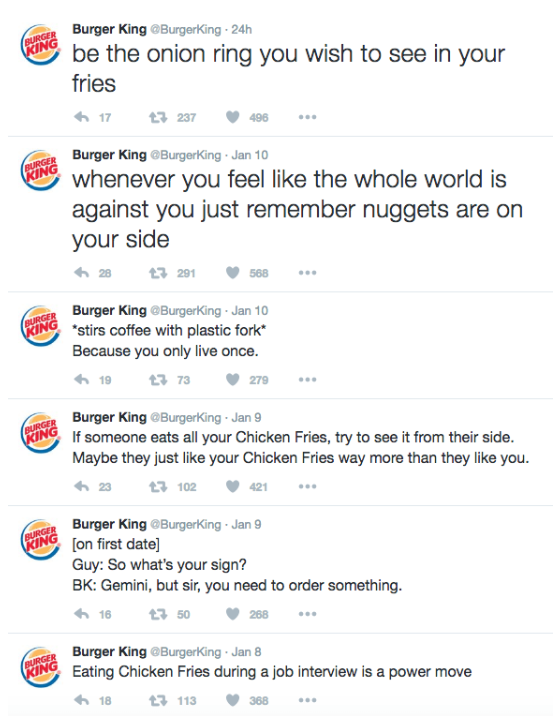
Memes, one-liners, and short comic videos can go MILES with your audience. Many companies today shy away from using humor to market their products or brands because they don’t believe that it takes away from the professionalism of who they are or are trying to be. We need to break down this belief that a company cannot be professional and fun. We could give you hundreds of examples of companies that do humor well, but one of our favorite examples is Amazon’s recent Superbowl video “Not Everything Makes The Cut” This video leaves you smiling as it depicts the various items that could be made into an “Alexa object” and how they could go wrong – not only making you laugh but also realizing on a new level why Alexa is so great, and how you could use it in your house. Another great example is as simple as Burger King’s many tweets – at times, they will poke light fun at their various fast food competition, and other times, they are just making witty remarks about YOLO(you only live once) or eating chicken fries during a job interview. This humor is relatable, entertaining, and fun to read, watch, and share. Making people laugh is always a good idea, no matter what company or industry you are involved in.

industry content marketing

Utilize Social Trends: Capitalize on already viral or popular content

The internet has given the world the ability to create new viral trends that seem to be weekly. A recent trend across all platforms is the legendary “Git Up Challenge,” where people post videos of themselves dancing a specific routine to the unique and recently released song “The Git Up” by Blanco Brown. Instantly, you had everyone from cowboys to news anchors doing the git up challenge. The Mobile Police Department of Alabama decided to join in by recreating their version of the already viral trendClick here to watch the video. This video has over 25,000 Facebook shares and 3,000 comments within the short time that it has been posted. Not only has this department made itself accessible, but these officers won the hearts of their community and country just by being willing to join in with a trend and having a good time with it. Capitalizing on trends doesn’t have to be hard; it could be posting a company update or sharing a fun trending video, or you COULD go as far as to make your remake or even a “response” video to the trend. It could be just a meme or a blog that uses wordplay to reflect the movement. It might be true that these little inserts might not automatically drive your sales up, but rather, they allow for brand recognition, larger product audiences going forward, and the ability for your company to step up to the same level as the people you are trying to reach.

Personalization

share a coke campaign

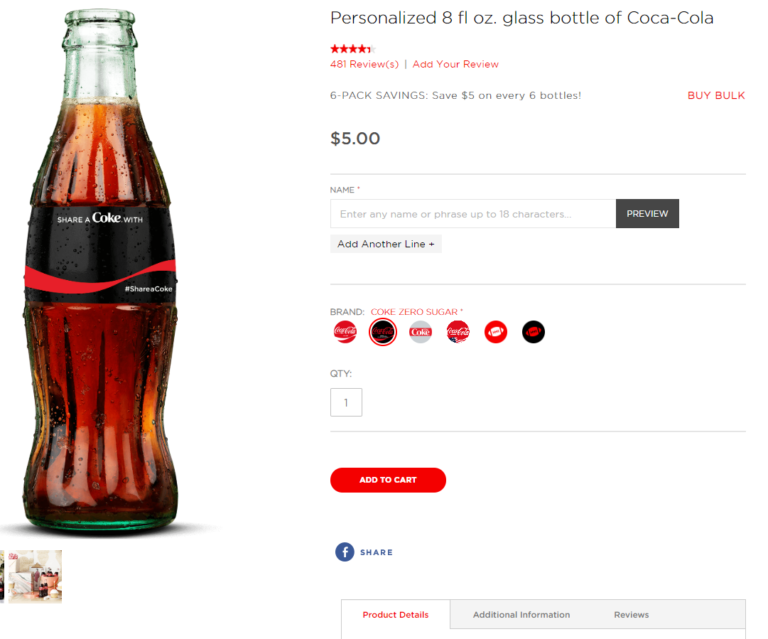
The Share a Coke campaign is probably the most widely recognized content marketing campaign, and quite possibly the longest-running. The Coca-Cola company started the campaign in 2011, over 8 years ago, in Australia. The idea was so well-received that they implemented it throughout the world. You can buy a Coke with your name on it, as well as buy a Coke with your friend’s name on it, to share with them (which is the whole idea behind the campaign). You can go as far as to order a personalized Coke bottle with your name on the Coca-Cola website, getting a discount if you buy an entire personalized pack. Personalize your product if you are able, to make it something that people not only want to buy for themselves, but they want to buy and share with all their friends.

Invest in Visuals: video, photography, etc.

Let’s be honest, good content marketing can go a long way without flashy videos, fun graphics, and perfect images…but they sure help!!! Set your business apart from your competition by investing in yourself, investing in your services, and in your business. Hiring a professional to create visuals that will accurately represent your company as it is now, as well as where you want to go. We all know that humans are visual beings, and having content that assists, promotes, and maximizes that specific element of who we are will only help your business grow.

Make it Community Oriented: Leave people feeling good about buying your product

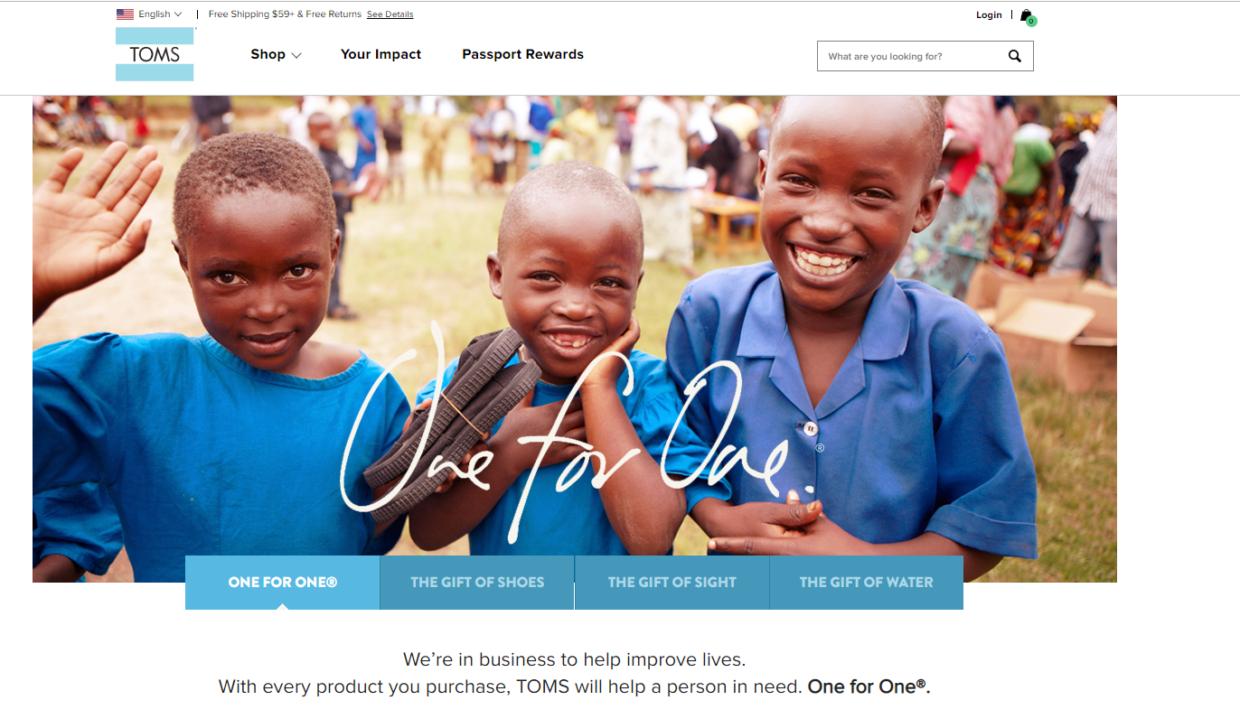
TOMS is a well-known apparel company that offers a “One for One” project. For every pair of shoes that you buy, TOMS will donate a pair of shoes to someone who is in need – this campaign is not only extremely positive and aimed at giving back, but it’s the perfect “feel good” motivation for someone to pay the few extra bucks to buy themselves the new pair of shoes they’ve been wanting while still giving back to the 

Toms One For One

community and world. This could be adjusted personally to your business however you like, if you are a coffee shop you could give 10% of each cup of coffee bought to an animal shelter, or if you are a mechanic you could choose a charity of your choice to come set up at your shop all day and make donations for every oil change, tire rotation, or new tire job that comes in. The possibilities are endless for any company.

Give something away for FREE

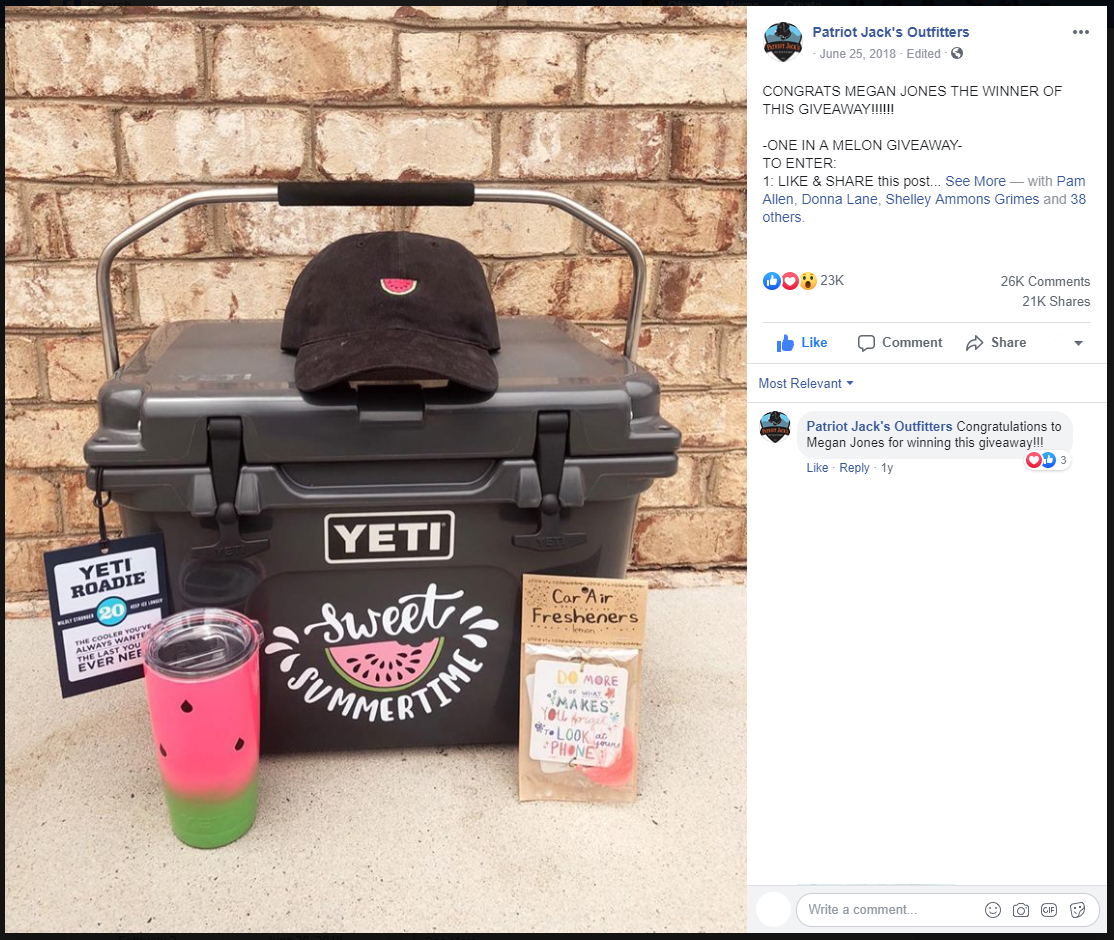
This is a no-brainer, but we want you to expand your horizon of thinking…don’t limit your giveaways to your goods or services, these are good and you should facilitate giveaways of your goods and services, but think about giving away some company merch, or better yet, put together themed giveaways. Here is a great giveaway we saw put on by Patriot Jack’s Outfitters on Facebook. They put together an awesome “sweet summertime” giveaway with a Yeti cooler, a watermelon Yeti cup, a hat, and air fresheners. They had over 21,000 shares, 26,000 comments, and 23,000 reactions. Think about the audience they reached and the exposure they received just for putting together a simple little basket that was most likely valued at less than $300. Put your twist on it, and do a spring, summer, fall, and winter giveaway – the options are endless when it comes to your creative mind. 

giveaway content marketing

So, there you have it, we just gave you SEVEN different ways to make sure you’re benefiting from content marketing in your industry. Completely boiled down, a successful content marketing strategy is all about getting creative. It’s standing out from your competition in a way that helps people remember you. No matter what industry you are in, or what your company values are, there are ways to make your business one to be remembered.

Content marketing isn’t easy for everyone, getting the right content in front of your audience that really helps portray your company in the best possible way can be hard – let us help! We offer services such as blog management, content writing, social media management(like all pages), and more to ease up some of the pressure when it comes to content marketing for your business. Contact us today to learn more about what marketing strategies we can put into place for you today!

Contact us today to learn more about what marketing strategies we can put into place for you today!

Connect With Us

Facebook
Twitter
YouTube
Pinterest
LinkedIn
Instagram

Categories

Recent Posts

Archives

Do You Have a Social Media Marketing Strategy?

Do You Have A Social Media Marketing Strategy?

3 simple social media marketing tips for your Marketing Strategy in 2019

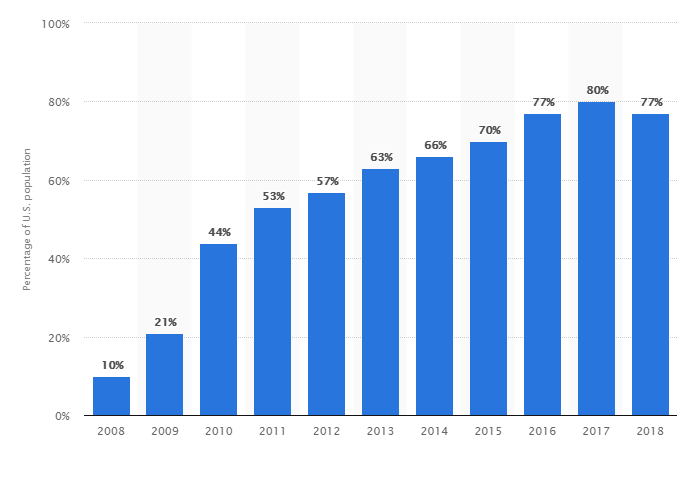
Do you have goals set up for your 2019 business year? What about social media marketing goals? Even if your answer to these two questions is ‘no’, it’s not too late to start! In the U.S. alone as of 2018, over 77% of the entire population has a social media profile. What an amazing platform you have to advertise your business…but, how do you begin?

We’ve decided to provide you with a few basic social media marketing tips to help you reach your company’s success on social media – once you’re done reading, you’ll have everything you need to create your own personal Social Media Marketing strategy for this coming year. To better create a social media marketing strategy, it’s a good idea to understand the purpose of the plan, who your audience is, and why it’s important to create goals for your platforms. Developing a social media strategy is important because we all know how fast time can get away from us, and marketing isn’t always the first thing on our priority list, your social media marketing plan will be an outline that will make it easier to have something to stick to so that you don’t lose sight of your goals for the year and also when you’re in a pinch of time, and are having some problems knowing what to post or how to show off your business, you have a game plan to keep pushing.

Set Business Goals...

When you start your own social media marketing strategy for your business, the first and most important thing that you can do is set your business goals. Setting goals for your business will give you something to work towards over an extended period…it will help you stay on track and not lose sight of what you are trying to accomplish. Whatever the goal is, make sure that it reflects your business properly, and will ultimately get your business closer to where you want to be one or five years from now! The most meaningful & valuable metrics to watch include but are not limited to leads generated, web referrals, conversion rate, and post engagement. The goal doesn’t have to be complicated or long, just make sure that its time sensitive & lines up with your overall business goals.

social media statistics

Know Your Audience

So, you’ve got 2-3 good goals that line up with the direction your business is going, now what? Get to know your audience. Who are you marketing to? What are their interests, likes, and dislikes? How can you best appeal your product or service to that specific grouping of people? This is not only your CURRENT audience that you will learn through research & tracking your current client demographics, but also the audience that you want to attain! Think proactively, making sure that you are posting content for the people that you WANT to reach. This step is CRUCIAL in making sure that you are creating content that your ideal audience will engage with, share, like, post about, and follow. Check out this free guide to Facebook analytics to make sure you are getting the most out of your Social Media Marketing.

social media marketing

Not only is Facebook Analytics a great tool to use in order to get to know your audience better, but using tools like Google Analytics & Webmaster tools will also give you some great statistics to make sure that you are doing your absolute best to get your content to the correct people.

Gain Insight From Competitors

Okay, so you’ve started posting great content, for the audience you have & also want to attain in the future…is that it? NOPE! Now comes the competition! Pick 3 of your biggest competitors – chances are

good they are already on social media and maybe even knee-deep in efforts to win over the same audience you are…so, use it as a learning experience, watch what they are doing, what is working for them and what isn’t, researching your competition isn’t something you can do in one afternoon, it takes many weeks, if not months of following along, seeing what they are doing & what is working for them. This should help give you better insight into what you have to do to create your unique content to capture your audience. 

Okay, so there you are, 3 social media marketing tips & a few simple steps to get your social media marketing off to the right foot this year, so one last step to remember is: take your 2019 goals and crush them! Make this year the year for your business, and when you do, send us a message to let us know how we helped.

Take a look at Spectrum Net Designs marketing services including Social Media Marketing, Search Engine OptimizationContent Writing, & Blog Management

Need help with Website Development and Design to make sure that you are Marketing a brand you are proud of?

WE’RE HAPPY TO HELP!

Share this post

Sources:
https://www.statista.com/statistics/273476/percentage-of-us-population-with-a-social-network-profile/
https://blog.hootsuite.com/how-to-create-a-social-media-marketing-plan/

Smart Writing or Writing Smart – How To Overcome Exaggerated Posts

Smart Writing Or Writing Smart?

Smart Writing or Writing Smart - How To Overcome Exaggerated Posts

Blogging is more popular than ever, freelance bloggers, hobby bloggers, company bloggers, and more all make up the intense blogging community. Various stats have proven blogs’ success and positive impacts on companies, including increased visibility. It is recommended that every company puts out 3-4 blog posts per WEEK to have maximum efficiency for traffic & leads. Here are some more blogging statistics for you from our friends over at Codeless.

  • Companies that publish 16+ blogs per month get nearly 3.5x more traffic than those that publish 0-4 month
  • Marketers who prioritize blogging efforts are 13x more likely to see positive ROI
  • Longer in-depth blogs generate 9x more leads than short ones
  • 60% of consumers feel engaged/positive with a brand or company after reading custom content on their blog

But, we can obviously gather from these few statistics the importance of blogging & the positive effect it can have on your business. But how many times have you clicked into a blog trying to learn something or get some information, only to read a few sentences into the article and have no clue what just happened…okay, maybe that truly hasn’t ever happened to you…But I’ll tell you from personal experience…IT HAPPENS!! As a fellow blogger, it can be easy to be carried away by your true passion for the subject and desire to bestow your knowledge onto anyone who will possibly stumble upon your writings, but we are here to tell you that isn’t always the best approach to have when writing your blogs and resources for your audience. So, how do you overcome overly technical & exaggerated posts?

#1 Write Like You’re Talking to a Novice…

Chances are, you will be! Writing to a novice of your shared interest will help you get back on track & only talk about the things that are important to know while starting. Try to remember back when your interest was sparked in this specific topic & make sure you are providing the information that a novice would want to know, not only that but in a way that a novice will understand, ditch the long words & explain theories…stick to the basics that make up the topic – remember you can always do a more in-depth blog as needed or as requested. Going beyond that, as you get into topics that a more intermediate-level person might be interested in, it’s still smart to write in a way that conveys your knowledge without stumping your readers. This is not a skill that will most likely come easily; it will have to be practiced & put into effect over time.

Smart writing

#2 Break Down Topics Into Series...

Breaking topics down into various parts is a great way to get more content out of one topic – especially if the topic is generally just more lengthy in the way it needs to be explained & understood. After all, you cannot stick to writing novice-level blogs forever, so when you do get the chance to write about a more intermediate-type topic & you need to go more in-depth, do your best to break it up into multiple blogs & postings. This will help keep your blog easier to comprehend without overwhelming your readers, as well as give them something to look forward to reading as you write & publish your next post. A great way to go about this is while finishing one blog, promoting your next one with a release date, as well as a tagline to help your readers want to come back to catch the next bit of information you will release!

smart writing

#3 Go In-depth Without Going Overboard or Losing Your Readers…

This is a hard rule for anyone who is interested in a specific topic – especially a topic that might just be generally harder to understand. Our advice for this is to go into detail and go in-depth, all the while being cautious of how you are doing so. A great way to expand on a subject is by using simple analogies, imagery, & other resources to help your readers get the most out of what information you are providing them.
It’s important to put content out that sparks your reader’s interest & keeps it! These tips are just a few guidelines to help you work on overcoming lengthy, wordy, & over the top posts that have the tendency to lose your readers’ interest and focus on smart writing to get the traffic and visibility you deserve.

If You Need Help With Blog Management or Blog Topic Generation

Contact us today to learn more about our BLOG MANAGEMENT and CONTENT WRITING services!

Share this post

Why Choose WordPress For Your New Website

10 REASONS TO CHOOSE WORDPRESS FOR YOUR NEW WEBSITE

So you’ve decided you need a new website, your old one is on its way out…or possibly already been out for months now, it doesn’t have the functionality you want & your current site just isn’t keeping up with your competitors…but where to begin? Most people generally do not get excited about the time, expense & research that goes into a website redesign. So, where do you begin? Generally, the first and foremost order of business is deciding with what platform are going to use for your new website, with so many “easy to use” website builders, such as WordPress, Wix, Gator, BigCommerce, Shopify, Webbly, Squarespace & more, we have laid out 10 reasons why we believe WordPress is the platform you should use for your new website, or website redesign.
Many people think of WordPress as a blogging platform only, this is how WordPress started out and got its reputation, but really, WordPress has drastically evolved throughout many years to be so much more than just a blogging platform, now you can host websites, build custom themes, and upload personal plugins to make sure your website is the best that it can be for your users. We decided it would be helpful for you to see why we support WordPress and why we suggest it for your new website, so here are 10 reasons why you should choose the WordPress platform for your new site…

content marketing ideas

1. Many people who are using WordPress for their website are not necessarily web developers or website designers. WordPress is a great option for these people, they have various already built “themes” and “plugins” that will help you build a professional website without needing prior web development or design knowledge. There are easy-to-use options for all of our non “tech savvy” folk out there.

2. WordPress is completely versatile. You can create anything from a blog to an e-commerce site, a product-based site, a membership website, and pretty much anything else you can think of. It’s customizable for your desires and wishes

3. WordPress is SEO friendly – SEO is an important part of marketing today. Making sure that your website is being found & indexed by search engines is important, and according to Google, WordPress is 99% SEO friendly. So, if you are looking to bring your SEO to the next level, WordPress is a great tool to use for your website.

4. WordPress is a FREE & Open Source- there’s got to be a catch, right? Well, in the spirit of all things out in the open, you will need to buy your domain and pay for hosting and various other costs, but the actual software, WordPress, is free.

5. Themes & Plugins give you complete customizable options – if you can dream it, you can bring it to completion. Not only does WordPress provide you with various pre-built themes & plugins, but you also have options to build your customized theme & plugins for whatever you could think of. To read about 24 WordPress plugins for your business website, check out this article: https://www.wpbeginner.com/showcase/24-must-have-wordpress-plugins-for-business-websites/

6. Safe & Secure – WordPress is supreme in the level of security measures that they take for their customers. They have staff that is updating CMS consistently, along with all the plugins that go hand in hand. Of course, to protect yourself, it’s best to only download plugins from WordPress itself or trusted sources. Read more about WordPress security here.


7. Mobile Friendly – This is a HUGE advantage today. In a world where most people have cell phones & surf the web constantly, your mobile online presence is crucial! You have to make sure that your website is not only available to your mobile users but also that they have a good mobile experience, that they can see the important pieces & parts, that images aren’t cut off or covering important text & so on & so forth. Being mobile-friendly is more important than ever. Read about it here: https://www.augustash.com/our-blog/mobile-friendly-websites-2019

8. Easy Social Media Integration – WordPress offers a simple way for your users & website visitors to interact with & be a part of your social media. This is especially great if you have a previously established online presence or a previously established social media presence. Feeding one off the other is a great way to build your company & business.

9. Scheduling makes blogging easy – not everyone has time to sit down 3 times a week to bust out a blog…we get it. So sit down for one day, bust out 3 blogs & schedule them for 3 different days! WordPress makes it easy to do that. You can schedule posts as far out in advance as you want to make sure you don’t fall behind in keeping your readers updated. Take a look at how to create the perfect blog schedule for your company here.

10. One of the BEST parts about WordPress is that it just keeps improving. With the community of users that are currently a part of WordPress, the site just keeps improving. It’s a great platform that only keeps getting better.

So you know why WordPress is great, but still don’t have the time, energy, or resources to make it happen? Spectrum Net Designs offers great custom WordPress development for your website. Contact us today to learn how you can update your website to make sure you are keeping up with your competitors.

Still Don't Want To Face A New Website - Much Less WordPress Alone? We Understand...

we also handle hosting & domain registration

Like this article?

Share on Facebook
Share on Twitter
Share on Linkdin
Share on Pinterest

6 Things To Consider While Updating Your Website

6 THINGS TO CONSIDER WHILE UPDATING YOUR WEBSITE

It’s time for an updated website…have you been noticing that your current site just isn’t keeping up with your competition; it’s outdated, clunky, too busy, or too plain. There’s no option for buying your products online, and your site just doesn’t reflect your business the way you want it to. Does this sound familiar? Keeping up with your online presence can be challenging, and now that you’ve realized your need for a change, you must begin the daunting task of beginning the updating process…
So, here are a few things to keep in mind as you begin searching for the right way to update your website so that you can make a statement as you jump into the 2019 world wide web with your new online presence for your company.

updating your website

First, take some time to check out your competition…they say imitation is the best form of flattery, but we are telling you, DON’T IMITATE YOUR COMPETITION! Take a look at your competition, check out what they are doing, then take the time to get a game plan going of how you can do it better. This will be the most beneficial thing in the long run. Secondly, think about your website layout & don’t be afraid to change it! Where do your current website viewers go? Where do they want to go? What are your hot products or pages? Use Google Analytics to help you investigate each of these things so that you can plan out & revamp your website in a way that is user friendly & specifically created for YOUR desired & current users. Third, more content is not always better content – keep your site clean & simple, modern & to the point. Too much text where it is not needed can ultimately hurt your user experience. Most of the time, people want a quick experience; they don’t want to sit on your site for 4 hours trying to sort through the information they need from the unnecessary fluff that happens to be in there. Keep your content as simple as possible. Fourth tip is to use the opportunity to re-evaluate your URL’s. If your websites been around for awhile, chances are you didn’t give much thought to your current web addresses & url’s on your site. Now is a great opportunity to change that. A page URL can affect various things, from user experience to search engine ranking. It’s helpful to get a plan together of what you want your URLs to portray as a website. The fifth thing to keep in mind is to secure your website(if it isn’t already). Making sure that your site is secure is important, not only to your users, but now, its even important to Google. Lastly, consider Search Engine Optimization – SEO is an increasingly important part of websites everywhere, and it’s no easy feat…seo has many moving parts that can make it tough to grasp. More power to the businesses, free lancers, bloggers, & other website owners who do SEO for themselves, but we also would advise that you consider hiring a Digital Marketing Agency that knows SEO well to assist you with the ins & outs of Search Engine Optimization.

These are our 6 quick topics to keep in the back of your mind as you consider a website update. Most importantly don’t be afraid to change up your website & take risks to make sure that you are providing something fresh for your audience.

Do You Need Help Getting Your New Website Up & Running? We Can Help

we also handle hosting & domain registration

Like this article?

Share on Facebook
Share on Twitter
Share on Linkdin
Share on Pinterest

How Can I Create A Logo For My Website?

Create a logo

Creating a Logo that Lasts...

Creating a logo is part of an important part of branding your business. Branding your business is one of the most important things that you will do in the life of your company. Branding is all about coming up with everything that will represent your company, your website presence, your logo, your social media interaction & so much more. Your product, website, and customer service should all reflect a specific, unique, and unified brand for your consumers. So, what ARE some things to consider as you begin the process of creating a logo for your website?

Number One:

A Logo is just one small part of this process and is something that takes a lot of time and thought – I mean, you want to be with your company for many years, right?
So, take the time, do some research & take a look at logos that have not only been successful but also stood the test of time for various companies. 

Number Two:

Less is more when it comes to your logo. Keep your design simple, as this will risk less as elements go out of style as the years pass, keeping it simple will lessen the number of things with the option to go out of style.

creating a lasting logo

Remember to keep your logo with correct sizing, your brand should be able to shrink for a business card all the way up to a billboard and not lose any of the crispness of the original, this is an important design aspect to getting your logo ready for use.

Number Three:

Many entrepreneurs decide that it’s a good idea to try and design a logo for themselves, but in the long run, this can end up costing more money than investing in a professional graphic designer from the get-go. Professional designers know what colors to use & how to execute a plan in order to make you a logo that will accurately not only represent your company but also in a way that will last & stand the test of time. Even if you have a vision for your logo, it is best to seek help from a professional to make sure that your logo is being created correctly & also in a way that will positively impact your business.

Number Four:

Make your logo a way to tell your story…sounds cliché, right? But your logo can be a representation of what your company is all about, the story that you want your consumers to see & hear when looking at your company. A story will help your consumer connect with your company & the people behind it!

Need to Share Your Logo Ideas With a Graphic Designer?

WE’RE HAPPY TO HELP!

5 Quick Tips About Search Engines

5 Quick Search Engine Tips

Search Engines can be confusing to understand & for many business owners, SEO is perplexing and over complicated.

We want to help you understand search engines a little better so that in turn you can be more successful with more understanding in your business and SEO endeavor. So, here are 5 quick and simple tips that will help you and your understanding of search engines.

1. Search Engines do 2 things: Crawl & Index

So, what does that mean? First, Moz.com compares a search engine crawling your site to a subway; everything is connected. They will investigate your content, going from page to page, checking links, images, paths, load times, and everything else. Second, indexing is simply the rank that Google or other search engines give your website based on relevance and popularity for any given phrase or keyword that is searched for by a user.

2. Algorithms are constantly changing

Although never confirmed, Google is said to change and tweak their algorithms DAILY! That’s right, daily! Many people get worried because they don’t know when Google is making these changes, as they don’t inform us when algorithms are changing. But, not to worry, unless you are practicing some shady SEO, you will not be affected much by these small tweaks and changes. (most of the time)

search engine tips

3. Search Engines are not senseless

…and they’re only getting smarter. Things like keyword stuffing and duplicate content, bad SEO tactics like that get noticed by search engines. Not only do they take note of these bad SEO tactics, but many times and most times, you will get penalized and keep note of your track record going forward. These things are not easily forgotten and can really affect your website and companies rank going forward.

4. Quality over quantity is noted

Search Engines as they crawl your page, check on things like readability, content value, etc. This is all to make sure that the content will be applicable for consumers. It’s important to realize and note that the content on your website is not taken lightly. As a business owner making sure that your content is useful, and provides something valuable to society is one of the most beneficial things you can do for your website today!

SEO tips & tricks
people marketing

5. Speed is Critical

Don’t ever sacrifice speed. Page speed is a crucial part of your rank with search engines. Just a second delay in load time can change your bounce rate drastically, and make it much harder to keep consumers on your site. That higher bounce rate can affect your search engine ranks pretty significantly. Long story short, pay attention to speed, you won’t regret it.

We hope these search engine tips have been helpful for your company’s SEO and other marketing endeavors. Contact us for help getting started with SEO!

Need Help Getting A Handle On Your SEO?

Blog Management is More Than Content Writing

blog management

Blog Management Content Writing

We all know that blogs are important for a website. Blogs should be one of the first priorities of your company’s marketing strategy.  They help your site gain more traffic, increase your site’s search engine rankings, help communicate to potential and existing customers, and more! (Check out our past blog to learn what that more is!) Bottom line, blogs help you get found online. Blog management is essential for sites that want to rank high in Google and want more traffic. Many companies are starting blogs and posting content, so why aren’t you? 

blog management

 It’s true, some companies don’t have time to write blogs. They take time and energy that most people can’t spare. If they do have time, most don’t know what to write about. So how do businesses make it work? They have blog management. The key to great blogging is to write content that complements your vision of your business. 

But did you know that blog management is more than just content writing?

What is blog management and what do blog managers do?

1.

The blog manager’s goal is to ensure the company is gaining the best result with traffic and ROI from the blog. So before the blog manager even begins writing, they need ideas on what to write about. They lead brainstorming sessions, research, and pick a specific target audience to make sure the result of the blog reaches its full potential.

2.

How can the blog manager be sure the blog is reaching its full potential? There are certain practices to make sure the blog has good search engine optimization. Formatting, readability, graphics, links, calls-to-action, headings, and more. Whoever is managing the blog checks and re-checks all these practices. Not to mention editing, proofing, and rewriting content! 

3.

4.

An important detail for blog management is scheduling. A blog calendar is very important for websites that have blogs being published daily, weekly, and even monthly. Google and/or Bing like to see a site that is updated regularly, whether that be daily, weekly, or monthly. The manager schedules and has ideas for blogs months before they are published.   For certain companies, seasonal blogs are important, while other companies have a certain time of day when the blog would get the most traffic. The blog manager knows all these things, and schedules accordingly. Each platform also has specific high ranking posting times, discovered from years of back data, that is extremely helpful for beginner bloggers and social media marketers.

The last, but maybe the most important thing, is what blog managers do once the blog is published. A certain amount of time after the blog is published, the blog manager analyzes the results. This is how they know if the blogs are helping and living up to their potential. If the blogs are not, the blog manager fixes the problem.  You can also take the approach beforehand and navigate away from issues with A/B Testing methods. 

As you can see, blog management is more than just content writing. It ensures that the blogs are living up to their potential and that you are receiving the best results with site traffic and sales due to the blog. Try managing your blog with a scheduling program to help you out and save time.

Quote

Do You Need Help Starting or Managing a Blog?

Contact us today! We will work with you to create a blog customized to your brand. We can produce content related to your specific industry and publish with or without assistance from your company. We know you’re busy, and we have years of industry knowledge to put to work for you.  

It is known that “the more, the merrier,” and that also goes for blog posts.  A minimum of 2 posts should be published each month to keep traffic flowing and provide fresh content to keep the search engines happy.  If there is not a blog currently on your website, we can set one up for your company.  Contact Shannan at 866.773.2638 or email her at Shannan@spectrumnetdesigns.com.

are you stuck - content writing services

New Facebook Templates Customized for Your Business

Now you can choose your Facebook page template based on the genre of your business.

What are the new page templates?

Standard

Good for all Page types, with buttons and tabs to help showcase what’s important to you.

Standard Facebook

Business

Designed to help you manage your business, including ways to post jobs and special offers.

Business Facebook

Venues

Designed so you can highlight useful info like your venue’s hours, location and upcoming events.

Venues Facebook

Nonprofit

Designed to highlight your cause and encourage people to fundraise and donate to your nonprofit.

Politicians

Designed to help politicians reach their supporters and communicate their message.

Politicians Facebook

Services

Designed to help people find your services and get in touch.

Service Facebook

Restaurants and Cafes

Designed to highlight photos and important info about your menu, hours and location.

Restaurants Facebook

Shopping

Designed to showcase products and make it easy for people to shop online.

How are the templates different?

Facebook has developed new Facebook page templates for your Company Page, depending on its use. These page templates range from Standard (original) to Business to Shopping. There is a new layout for almost any sort of business, and each template differs by changing the tabs it shows on the Page. For example, a Non-Profit template would have a “Donate” tab front and center where people can easily give to your organization.

Is this a good or bad change?

Despite some confusion as to how to change templates, what template to use, and whether the template for your company is the right one, these new templates have been extremely helpful to most companies looking to enhance their Facebook page. Now, tabs fit a person’s specific needs. Nevertheless, change can be difficult. Now the page’s owner must relearn where everything is placed, what tabs are shown, and what content the audience can see. This can be a big step, especially for businesses with a lot of content, like restaurants and non-profit organizations. Once the change is made, though, you can always return to the standard template it was originally on, but who knows, maybe you’ll like it! There’s only one way to find out.

Can I still edit the tabs on my Professional Facebook page?

Once you change the layout of your Page, you also have the option to edit the tabs. Adding, dropping, and changing the tabs on your page gives you the freedom to make your page personal and unique. No more repetitive pages that all look the same! All these changes make us wonder, what will Facebook do next?