Social Media Archives | Spectrum Net Designs

Boosted Post or Meta Ad: Which is Better for You?

Boosted Post or Meta Ad: Which is Better for You?

When it comes to advertising, there are many options to choose from. Don’t let it confuse you! In this blog, we break down the difference between a formal Meta Ad, and what you would see as a boosted post on Facebook.  Read on to learn more! 

Meta and Facebook: How are they related?

Facebook was once known as the overarching company connecting the social platforms of Facebook, Instagram, WhatsApp, and now Threads.  It changed the name of the parent company to Meta. So Facebook now just exists as a social media platform.  Meta did this in order to pursue avenues further than just the world of social media.  Meta wants to dip their toes into the world of virtual and alternate reality, gaming, and much more that we will be seeing soon. 

Read more about Facebook’s name change to Meta in our blog! 

What is a Boosted Post?

While scrolling through your Facebooks feed, you may have come across a post from an account you are not currently following.  This post, under where their name is will have a little bit of text that reads, “Sponsored”.
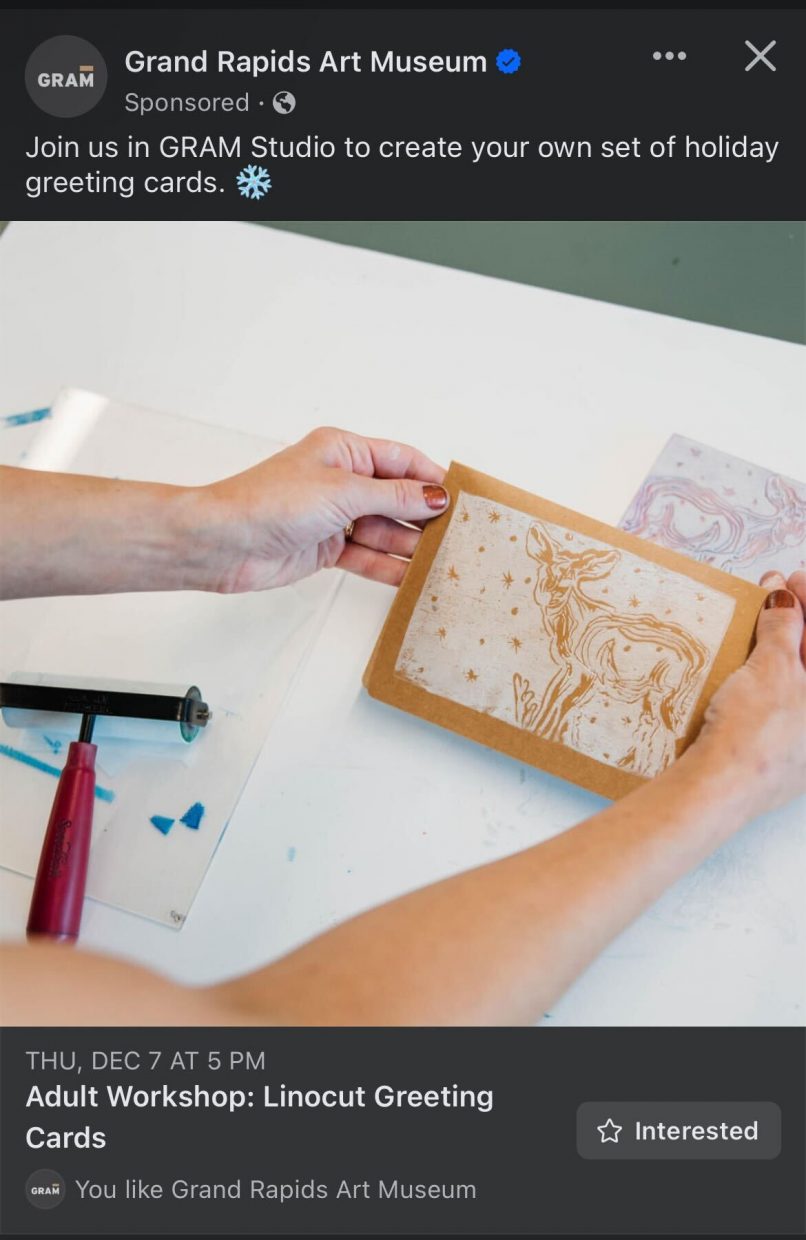
This means that the advertiser paid to make sure this post shows up in front of you.  The more money applied to the boosted/sponsored post.  The more people that will be able to see it!

It is important to note that a boosted post is the same as a sponsored post.  As they can be referred to as both around the online world. 

A boosted post like this is great to increase general brand awareness.  If you are boosting a post that is interesting, eye-catching, and new to your audience, it may help your company get in front of new eyes! This is a good opportunity to show just a bit of who you are and what you offer so you can get more eyes on your business. 

A sponsored post is also good for engagement with a specific post.  If your post comes across their feed, they may be more inclined to interact with it, giving you more engagement and interaction that could lead to conversions.  
What is a Meta Ad?

Made with the Meta Ad manager, running an ad through Meta allows for you to have a series of images and copy that can be posted in various ways across all the platforms that Meta has ownership over.  For the most part the focus is on Facebook and Instagram. 


While you can have a sponsored or boosted post on Facebook and Instagram, running an ad or an ad campaign through Meta can allow you to have visibility on both platforms simultaneously.  

An ad campaign is a series of ad posts that all focus on one thing.  The posts of an ad campaign could all focus on a new product or upcoming event.  

Based around the goals of your business, a Meta ad or campaign allows for more specific targeting, as well as the ability to learn more about your audience over time. 

To read a deep dive into What Exactly Is A Meta Ad, check out our blog!

Advantages and Disadvantages of a Boosted Post

One disadvantage of a boosted post is less engagement when compared to an ad.  While you may get some post interaction, you may not get as many people following your post to your actual website. 

The advantage to a boosted post is that they are easy and quick to create.  It takes about as much time as creating a regular post usually takes. 

A boosted post is also great for reaching people that are connected to your current audience.  This means friends of friends, followers, and other connections your audience may have.   

Advantages and Disadvantages of Meta Ads

Unlike a boosted post, an ad or ad campaign takes much longer to create, especially depending on how long you want your ad to run.  Ads are also normally much more in depth and carefully structured.   

With a Meta ad, you will also be more likely to get better results.   

Ultimately, it depends on what your needs are and what your goals for your business may be that will help you choose whether a boosted post or a Meta ad is better for you! 
Unsure of where to start? Boosted post or ad, we can help
with both!

Contact our marketing team today to see what we can do for
you!
Ready to Run Ads with Facebook? Here’s Where to Start!

Need Help With Facebook Ads Get Expert Guidance

Are you looking to expand the reach of your company? Do you want to start showing your ads to potential customers, but have no idea where to start? Facebook, now Meta, is a great place to begin your advertising journey.  Read more about Facebook’s Name Change To Meta

Not only can Facebook help you get in front of such a large group of people, but it can get you in front of those people who need your exact product or service.  Showing your ads to the right people will not only streamline your audience, but it will also help you get the most bang for your advertising buck. 

So, What's the First Step?

The first step in starting to advertise on Facebook is to Set Up A Meta Ads Account.

Once you have an account created, you will need to install a Pixel into your website, so Facebook can accurately monitor stats and help point people to your site via ads! 

What is a Pixel and Why Do You Need It

A Meta Pixel is a piece of code that you can install on your website, very similar to the process of Google Analytics.  This piece of code will then allow you to monitor what people do on your site, as well as retarget people who have already visited a specific page on your site with more ads. 

A Pixel is very important, as it essentially helps Meta create a specific audience for you to continue to have effective and successful ad campaigns. 

How to Install A Pixel

There are two different ways to install a Pixel on your website.  First, you can install it through a partnering platform such as WordPress, Square Space, Shopify, or WooCommerce.  Meta has a full tutorial to help you with this process. 

Second, if you do not operate your site with any of the above platforms, then you must install it manually.  This process involves copying the code and inserting it in a specific part of your website’s code, usually the header code.  Meta also has a tutorial for this process. 

Have more questions or need help Troubleshooting Your Meta Pixel

How Do Ads Work? Explaining the Ad Auction

Essentially, what Meta does is allow your ad to compete to be shown every time there is an instance that an ad can be shown across their websites/platforms.  They are trying to get your ad in front of the eyes of the people most likely to be your true audience, those who will interact with your ad. 

Meta states that there are five things that they take into consideration when it comes to picking when and where your ad will be shown.  These five things are Objective, Targeting, Budget, Duration, and Creativity.

Objective

There are 6 objectives you can choose from when it comes to creating your ad.  Awareness, Traffic, Engagement, Leads, App Promotion, and Sales.  Depending on which one you choose, you are effectively telling Meta what the goal of your ad campaign is.  You will select an objective based on what you are trying to generate for your business. 

·         Awareness: This is the goal of wanting to get your ad viewed by as many people in your location as possible.

·         Traffic: This objective aims to get people to visit your website. 

·         Engagement: Like Traffic, this goal wants an increase in interactions from people to your posts or website. 

·         Leads: Leads are the objective that has the goal of getting real contact information of real people for you to utilize. 

·         App Promotion: This goal is great if you have an app and can be used to generate downloads. 

·        Sales: The objective is to encourage sales within your page.  

Targeting

This is the portion of your ad that is focused on reaching your target audience.  If you are a landscaping business, then you would want to target people with homes, or businesses, that have yards or landscaping plots that need taking care of, therefore you may want to target married couples of homeowning age, or older ages in certain neighborhoods that you know are a lot of business, or even certain areas that have a lot of residential homes with yards, etc.  

Budget

Your budget has a lot to do with how your ad functions on the ad auction.  How much money you set for each ad will directly correlate to how many people will see your ad. 

You can set either a daily budget or a lifetime budget. 

A daily budget is exactly what it sounds like, a budget that is set for either your campaign or your ad that runs over a day.  It will be how much you want to spend on a day-to-day basis for your advertising. 

A lifetime budget is how much you will spend over the whole duration of your ad or campaign.  This is great for those who don’t want to go over a certain amount of money overall.  

Duration

This is the date range for your ad that you get to set.  The longer your ad runs, the better it will do, as more people will see it.  Scheduling your ad is very important, and factors like the time and date should be taken into effect.  Will you show your ad more on days people are less likely to be working? Will you not run ads on holidays? Knowing these things is important for the overall ad process.  

Creativity

Is your ad original and eye-catching? Ads with similar theme colors to their landing pages, as well as remaining visually interesting and clean will always do well compared to cluttered, spammy ads.  

What Makes a Quality Ad?

It is a great idea to have your ad always remain relevant to the landing page you will be sending people to.  Doing the opposite can give your ads a spam-like feel.  Keeping a uniform color scheme and neat text and fonts also encourages clicks. 

Ad quality is important because the more your ads get recognized as quality, rule following, and safe ads, the more Meta will learn that they are the best kind of ads to be promoted.  Otherwise, they will get suppressed.  

What Could Get Your Ad Rejected?

Any form of profanity or promotion of harmful and obscene content will most definitely be a recipe for disaster.  Other things, like misinformation, reactionary content, hate speech, and promoting illegal things are bound to get your ads suppressed or rejected.  Use common sense and keep your ads straight to the point and you’ll be just fine! 

Meta ads are a huge component of the world of online advertising, and hopefully this blog helped explain it a bit more!

If you need more information, HubSpot has a great Facebook Ads Checklist!

Looking to get your Facebook Ads up and running? Contact the Spectrum Net Designs Marketing team for all your marketing and advertising needs!

Everything You Need to Know About Facebook’s Name Change to Meta

Why Did Facebook Change To Meta?

In October 2021, Facebook made the decision to change its name to Meta.  This decision came into effect on June 9, 2022.  This was brought about due to several reasons, but the biggest reason is that Facebook and Mark Zuckerberg had decided that the company was in need of a rebranding. 

This comes after much debated issues, such as privacy concerns and misinformation battles, and the widely known fact that Facebook acquired Instagram in 2012 and WhatsApp in 2014.   

You may have seen the news of a name change and are now wondering, “What does this mean for me?”

If you use Facebook for your business, or even personally, you may be worried that this means something drastic for you.  Have no fear, we break down everything you need to know about this new name change below!

A collection of buttons with facebook logos.

Why Did Facebook Become Meta?

If you’ve been following the news, Facebook has become so much more than just a social media website now.  They have expanded so much (even beyond Instagram and WhatsApp) in the last few years alone, and they needed a name change to reflect that.  Meta and Mark Zuckerberg are now turning their focus to the “Metaverse”, a virtual world where people can interact, work, and connect.  This is all done through a mix of virtual reality (VR) and augmented reality (AR).

What is Virtual Reality?

Virtual reality is the immersive world created to appear 3D and interactive to the user.  You can usually be a part of a virtual reality world by wearing a headset to replace your natural vision and the use of hand controls.  Most virtual reality games and spaces require standing to have a fully immersive experience.  

What is Augmented Reality?

The most popular example of augmented reality is the game Pokémon Go, which first made its appearance in 2016.  This game utilizes your smartphone’s camera to overlay a digital display of a character or setting.  For the Pokémon Go game, characters are projected onto your real-world surroundings, and a map of your area is available with places you can “visit” with that map.  

What is the Metaverse?

With virtual reality being bigger than ever, Facebook has set its sights on that realm.  After acquiring the virtual reality headset gaming system Oculus in 2014, Zuckerberg and Facebook have decided their next projects are going to be focused on creating a world that is entirely virtual. 

The Metaverse will be a place you can enter through a headset and can interact with people and businesses in real time, while never leaving your home.  With this new technology, Facebook aims to revolutionize the personal and professional spaces.  

So, What Does This Mean for Facebook Users?

Both those who use Facebook for personal and business needs can expect not much to change.  Like Google rebranding to “Alphabet” in 2015, the only real change is that the parent company of Facebook will change.  Your pages will stay intact!   

What Does This Mean for Facebook Ads?

Facebook ads will remain pretty much the same, with the umbrella brand “Meta Ads” now. 

Are you interested in having an ad campaign of your own?  Do you want more eyes on your business?  Contact the Spectrum Net Designs Marketing team today to see how we can help you!  Our ads bring traffic to your sites and business because we know Facebook (and Meta). 

As we can see, this change is just a small rebranding, with big dreams.  Facebook is looking to expand, and as they are one of the biggest companies in the tech sphere right now, it is important to keep an eye on its next moves.  While the Metaverse is still in production, its invention will most likely change the course of reality as we know it.  Keep an eye on our blog for more updates!

Why Is No One Reading My Blog? 10 Tips to Get Your Blog Views

Why is No One Reading my Blog? 10 Tips on How to Get People to View your Blog!

As we have heard many times over the past few years, “Content is King”, meaning that content is key in growing your audience and helps you play the long game in marketing. A good way to create content for your website is to create a blog.  A blog is a fantastic addition to your site, as it lets you continually add content, with each blog bringing the chance of new eyes on your work or business. 

However, a blog without views doesn’t do very much for a website. So, you’ve got your blog up and running, but there are no views! Are you wondering why that is? Read on to hear our top ten tips on how to get people to view your blog!

A woman seated at a desk working on a laptop with a mug of coffee beside it.

Tip #1: Have a Consistent Focus

Narrowing down the focus of your blog helps you target an audience directly.  The goal of your blog should be to establish yourself as a thought leader in your focus area.  While it may seem appealing to write about a variety of topics, readers may end up confused about your blog when you are writing about flowers one week and birds the next.  Targeting a specific topic, and in turn a specific audience, makes it easier for people to know that you’re the one to come to about your chosen topic. 

Not only does this help readers, but keeping your blog about one topic helps you rank on Google as well. Google combs through your site, following links and checking keywords that you may be using to learn what your blog is about.  Sticking to one topic helps Google show your site on the results page when people are searching for the topic you are writing about.  

Tip #2: Research SEO Before You Write

Research some relevant SEO keywords to include in your blog before you start writing, in order to build your content around those keywords.  You could even go a step further and use SEO to create a content strategy based on SEO and topical relevancy. To read more about this, check out our blog here

Tip #3: Use Hierarchal Formatting Correctly

Using hierarchical formatting, like H2s and H3s (in correct descending order). Not only helps your readers follow and possibly skim your content, but it also helps Google “read” your content, allowing your blogs to be indexed properly by Google.  

Tip #4: Utilize Backlinks and Internal Links

Backlinks:

Backlinks are links to your content from other sources.  Having backlinks increases your authority and gets more eyes on your content.  You can get these by reaching out to other bloggers and websites and getting them to link to your content!

Internal Links:

Linking to your own content within your own posts allows your readers to discover more of your content, and it also helps Google to crawl your content and learn about what your content is focusing on in order to show your site on Google.  

Tip #5: Add a Call to Action

Adding a call-to-action, such as a call to subscribe via email or check out another section of your site, can be a very effective way to encourage your readers to continue their descent into your content without sounding too salesy.  This is most likely done at the end of your blog post.  

Tip #6: Craft Good Headlines

A good, attention-grabbing headline is sure to get your audience to click on your blogs.  Keep them simple, but explanatory, and you’ll be set.  To learn more about how to craft a solid headline, check out this WordPress article.

Tip #7: Make Your Content User Focused

It can be said that readers are more likely to continue reading content that is more focused on them, and less about the author.  While it may be tempting to talk about yourself, it may be best to make sure your content is at the most useful as it can be to your readers, to keep them on your blog, and to keep them coming back.  If you keep it genuine, and not just about sales or yourself, it will draw readers in.  

Tip #8: Post Consistently

Being consistent keeps you at the forefront of your readers’ minds, as it is easy to forget about a blogger if they are inactive for some time.  Post regular content, and batch write your blogs to schedule ahead of time when you are feeling super inspired to avoid burnout.  

Tip #9 Promote on Social Media

Do you post your blogs to your social media? Do you have buttons for each social media site on your blog that make your content more sharable? Do you have an easily pinable image that readers can use to share this content on Pinterest?  Having all of these things in place helps you and your readers utilize social media to spread your content. 

Posting a blog is half the battle, the other half is promoting it on social media.  Doing things like making a cool graphic and posting links to your social media will greatly increase your chances of fresh eyes on your blog.  

Tip #10 Prioritize Helpful User Design

If your website is hard to navigate, readers may not want to stay on your site very long.  Make sure you have a good design and a good user interface to appeal to new and old readers.   

Another element to consider is that you will want to make sure your blog and site have a quick loading time; usually, about three seconds or less is ideal. If your site takes 9 seconds to load, it may deter your readers from staying on your blog.

Paid Social vs SEM

paid social vs sem

Paid Social vs SEM- What's the Difference & When Do You Use Both?

Paid social is considered to be proactive media, meaning that you are presenting your ad to someone who isn’t necessarily looking for that information.

SEM, search engine marketing, on the other hand, is a reactive media. This is a type of media where you present your ad to someone who is actively looking for your product or service.

Benefits of SEM vs Paid Social

It’s important to remember the following as a general common-sense rule within the industry.

Paid social might get you some last-click conversions/sales/leads, but in reality, it works like display and video. Those two things help you garner more awareness and re-engagement.

Paid Search/SEM has a high intent for a faster conversion/sale/lead because the consumer is the one who engages in your ad. This is not the best tool for driving brand awareness. Search tends to do an okay job at injecting your brand into the SERPs if you aren’t a known player, but look out for the “branding” lift you get out of it.

Key takeaway: SEM drives actions and paid social drives awareness.

So, the next question we will try to answer is: how do you know when to use each one?

Let’s start by explaining the difference between organic social, paid social, and paid search (SEM).

  • Organic Social: your organic social represents what you can control: your owned media. In turn, you can use paid social to boost a larger audience.
  • Paid Social: this strategy is used to push your organic social and to drive new followers and engagement to your page, so then you can push more owned media towards those new followers who have expressed interest in your brand. Or, you can drive them to your site to collect their data and later retarget them with a new opportunity.
  • Paid Search/SEM: this strategy is used when you have something you want to push out but only deliver it to individuals who are actively looking for your product/service or something similar.

When to Use SEM vs Paid Social

  • If your objective is to drive direct from your website sales/leads/website-based engagements, then start with SEM.
  • If your objective is brand awareness or product awareness or re-engage with your audience who have visited your site in the past, start with paid social.

With that being said, of course, there are multiple reasons to run both strategies simultaneously. Some of the most obvious reasons include:

  • Remarketing: Someone searches on Google and lands on your website but then abandons it with no engagement. You can then use paid social plus your homepage audience list to remarket to them through a paid social ad.
  • Capturing the Mid to Low Funnel: A person who is scrolling on Facebook and sees your ad highlighting a discount code but then turns to Google to try and find a better deal. You can then follow them over to Google with your opportunity for a better chance to capture them.
  • Building Your Remarketing Audience List: utilize search engine marketing to send highly qualified consumers to your website to grow your remarketing lists. Which, in turn, leads to creating a bigger and more accurate lookalike audience for your paid social campaigns.

Connect With Us

Facebook
Twitter
YouTube
Pinterest
LinkedIn
Instagram

Categories

Recent Posts

Archives

We hope that this information gave you insight into the difference between paid social advertising and search engine marketing. We understand this can be a tad confusing, and since we’re the professionals here at Spectrum Net Designs, we’d love to help you out! We provide both search engine marketing services and paid social advertising services and know how to use them together effectively.

Check Out Our Full List of Marketing Services Today! Or Get in Touch By Sending Us an Inquiry!

Happy Marketing!

How iOS14 Update Impacts Your Facebook Ad Campaigns

iOS14 update

How IOS14 Impacts Your Facebook Ad Campaigns

In a recent survey, 4 out of 5 people want a privacy law to protect their data. That means that 73% of people would like to pay more to online service companies to ensure they do not sell their data for marketing purposes.

As a result of this, Apple developed the iOS14 update that will limit Facebook Ad functions and its tracking for app and web conversion events. An important note here is that this change only applies to those who use iOS devices that have iOS14 iOS14 update installed. Businesses will still see complete user data for all eligible devices (Android and desktop).

Most Important Changes to Your Facebook Ads

Advertising and driving conversions will work with iOS14 devices but with limited tracking. Let’s check out some of the most significant changes you should beware of that come with the iOS14 update:

Facebook Pixel TrackingPixel events like form submissions, click to download, add to cart, or purchase completions will have fewer numbers reporting due to more people opting out of being tracked.

Facebook Optimization By piggy backing off of less pixel tracking activity, there will be less data to work with when optimizing your ads.

Retargeting & Audience Segments Users who visit your site, use iOS14, and opt-out will not be tracked. Meaning they are unable to be included in your retargeting or lookalike audiences.

The Facebook ad objectives that are directly impacted by this change are traffic, app installs, conversions, and catalog sales.

Traffic If you choose “link clicks” for your objective, it will not be affected. But if you choose “landing page views,” which uses the pixel, it will not track the iOS14 users.

App Installs any targeting for iOS14 devices will not be tracked.

Conversions & Catalog Sales for both objectives, the attribution window will change from a 28-day click & view to only a 7-day click and 1-day view for all devices.

All conversion activity that takes place solely on Facebook or Instagram will still 100% be tracked and reported correctly. For example, a Facebook lead form ad or purchase on Instagram shopping.

What Facebook Advertisers Can Expect To Do

The beauty of the iOS14 update is that traditional marketing skills will become important again. We were at a point where Facebook made it too easy for anybody to come in, make an ad, and let their algorithm come up with sales- even someone who had no knowledge or marketing skills. IOS14 is separating the cream from the crop- the industry needed a little bit of a cleanup. We can notice that Facebook Ads have become more challenging, but with that, there is also less competition. So, how can you separate yourself and still see results with your Facebook ads? Let’s explain.

Facebook has introduced a solution, Aggregate Event Management, it will support the measurement of web events from iOS14 users once Apple requires the ATT prompt. It’s designed to help you measure your campaign performance while also respecting consumer’s decisions about their data.

Event Limits: Users will be limited to the use of 8 conversion events per domain. You will not have to make any changes to the pixel or your Conversions API implementation as event selection is done in Events Manager starting in early 2021.

  • Ad sets optimizing for an event beyond the eight that are prioritized will be paused.
  • The eight conversion events per domain will be ranked based on priority. If you have multiple events completed by a user, add to cart, and purchase, only the higher prioritized event will be reported.
  • After you set up the initial configuration, the owner of the domain will be able to set up which events are most important and bring tracked in Events Manager.

Connect With Us

Facebook
Twitter
YouTube
Pinterest
LinkedIn
Instagram

Categories

Recent Posts

Archives

Actions to Take Now:

Verify Your Domain in Business Manager: You should follow the steps outlined in the Facebook Help Center to complete this step. This is a very important step for businesses with pixels used by multiple Business Managers or personal accounts. Verifying your domain will ensure no immediate or future disruption in the ability to configure conversion events.

Plan Your 8 Conversion Events per Domain: If you are currently using more than eight conversion events per domain for reporting or optimization, come up with a plan of action for how to operate with the limited eight events per domain based on what’s most important for your business objectives. You do not need to make any changes to your pixel or Conversions API implementation since event configuration will be completed in Events Manager.

It’s important to remember that iOS is a piece of the pie when it comes to the total smartphone market share, so all the edits and tweaks will be adjusted for a specific audience as part of your overall strategy. 

iOS14 update

Think of it like running your restaurant and finding new and improved recipes to accommodate customers with dietary restrictions. Marketing is all about finding creative solutions to properly serve your audience. The digital landscape is always shifting, and changes like this keep us on our toes and allow for creative solutions!

If you’re looking for help with your current Facebook or Google Advertising- Let’s get in touch!

Contact our Marketing Department today to see how we can help you out!

The Difference Between Organic and Paid Social Media Advertising

Understand the Difference Between Organic Posting and Paid Advertising

What is Organic Social Media

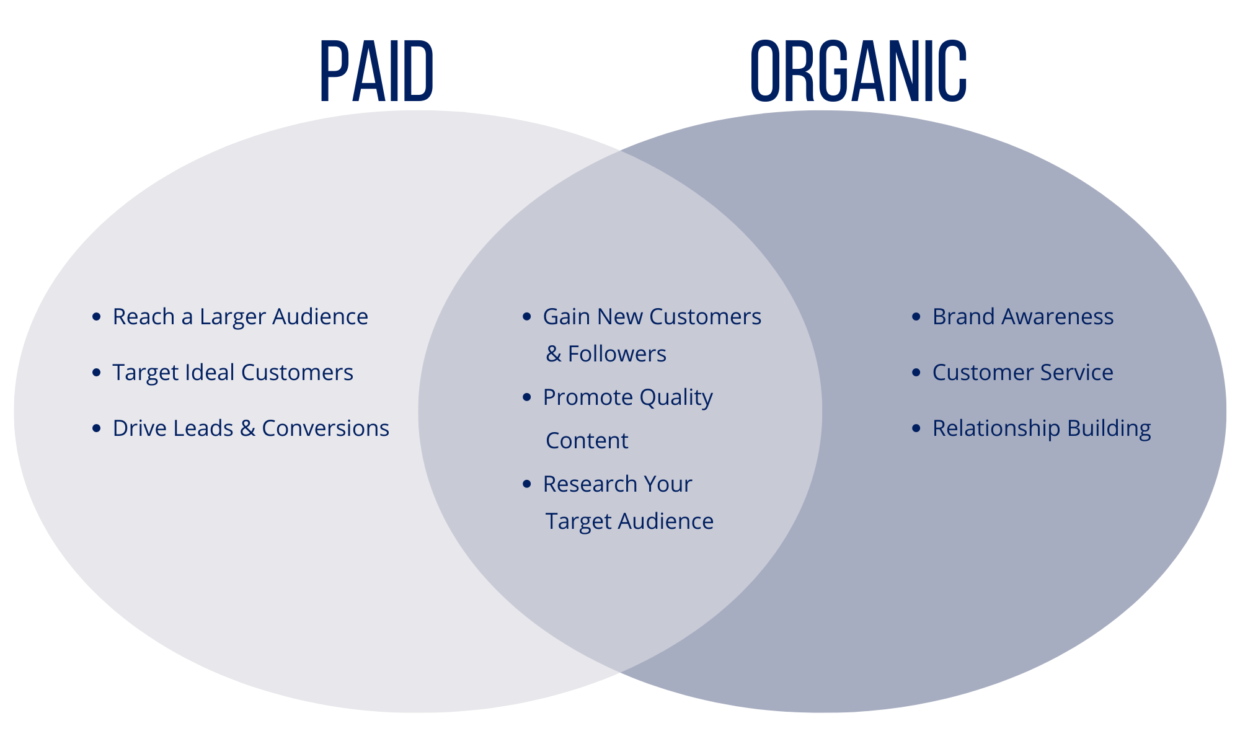
Organic social media is the free content (posts, photos, videos, memes, stories, etc.) that users, including company’s and brands, share with their following base on their feeds.

As a brand, when you post organically to your account, you can expect the people to see your posts are:

  • A percentage of your followers (your organic reach)
  • Your followers’ followers (if people choose to share your post)
  • people following the hashtags you use in your posts

It sounds simple but the reason organic social media is considered the foundation of every digital marketing strategy today is because it’s the best way to nurture the connections with your customers at scale.

Brands will use organic social media to:

  • Establish their personality and voice
  • Build rapport by sharing information, entertaining, and/or inspiring content
  • Support customer base with customer service

Example of Organic Posts

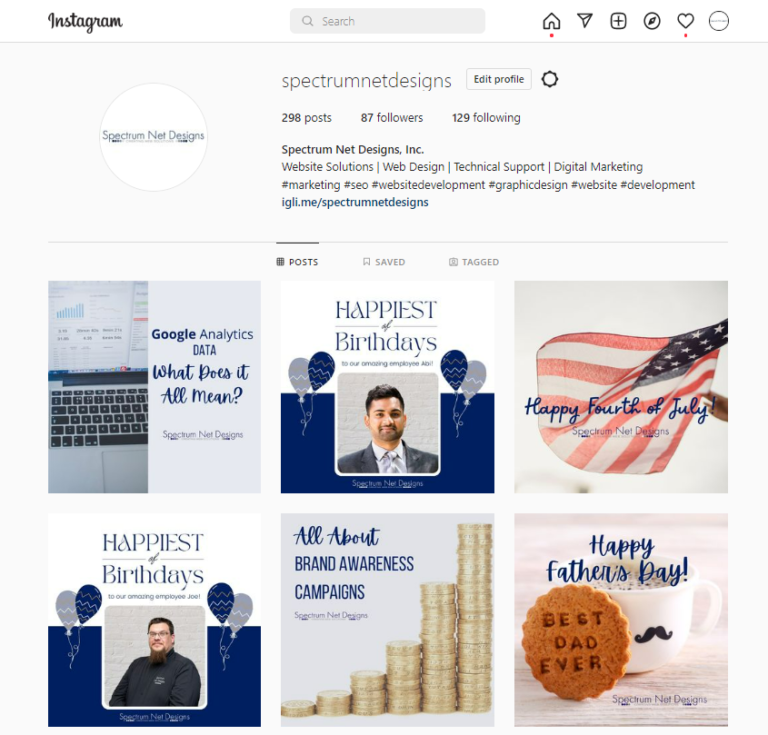
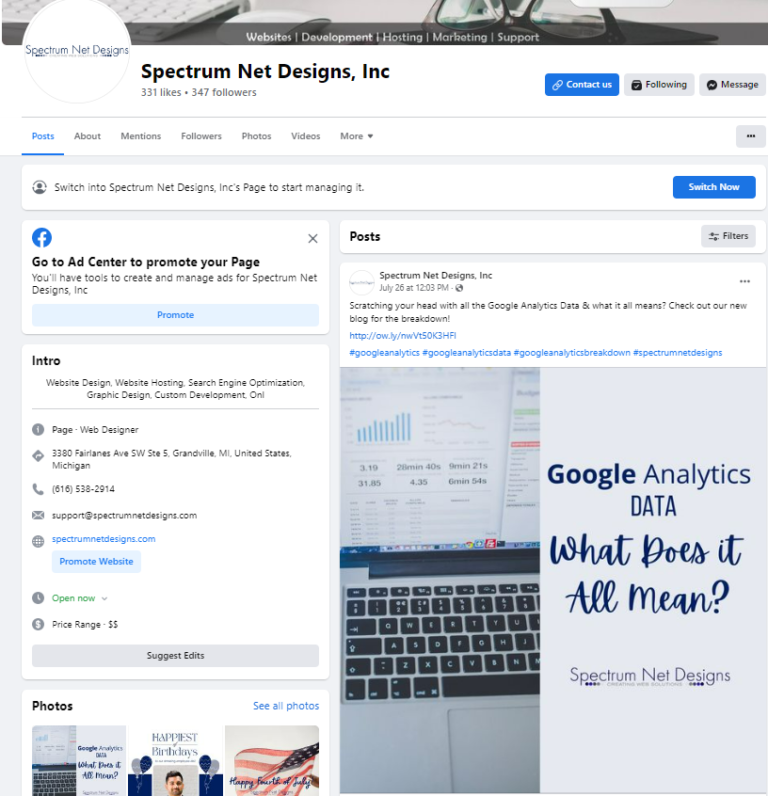
Examples of organic posts are those that live on your Facebook Timeline & Instagram accounts. They will be shown to your friends, friend’s friends (if liked, commented or shared only) & people who follow the hashtags you use.

Check out Tips for Clean, Professional Instagram Aesthetic for more information on how to boost the aesthetic of your business social accounts! 

Organic vs Paid Social Media Advertising

Connect With Us

Facebook
Twitter
YouTube
Pinterest
LinkedIn
Instagram

Categories

Recent Posts

Archives

What is Paid Social Media

Paid social media is just another word for advertising. Its when brands pay money to run advertising campaigns on social platform such as Facebook, Instagram, Google, LinkedIn, etc. The campaigns will be highly targeted and shared to an audience that will likely be interested in what they’re promoting. You can tell a paid ad by it saying sponsored under the company name. 

The uncertainty of 2020 has rebounded paid social media by not only increasing users time on the platforms, but they are also now, more than ever, shopping online via ecommerce or social media stores. This makes your ads seem like a more natural part of the scrolling social media experience, especially when your ads a thoroughly thought out and designed with purpose.

B2C companies are not the only industry focusing on the raising popularity of social media advertising. More so than organic posting, paid social media advertising is the best way for brands to tap into new audiences and convert those individuals into customers. Businesses use paid social advertising to:

  • Raise brand awareness and attract a new audience
  • Promote new deals, content, events, etc.
  • Generate qualified leads
  • Drive conversions

Example of Paid Ads

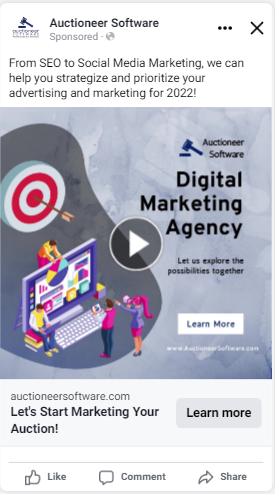
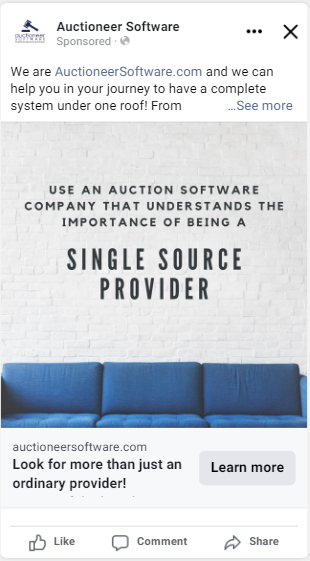
Examples of paid advertising posts look like the ones below. Note that it shows the company or business who is promoting the opportunity & it says ‘sponsored’ under the name. These posts will be shown to a selected audience based on their online interests, behaviors & demographic targeting wherever they are spending their time- Facebook, Instagram, or the Audience Network sites. You can create static images, videos, slideshows & carousels. 

Check out Guide to Facebook Ads Manager for more information on how to get started with your own Facebook Ads! 

Organic vs Paid Social Media Advertising

Organic vs Paid Social Media Advertising

Both the organic and paid social strategies have their own advantages and disadvantages. Let’s quickly look at some of them.

An organic social media strategy will nurture the relationships with your customers or audience. Organic social media will:

  • Establish and grow your brand’s presence where people are already spending their time
  • Retain and support your existing customers
  • Create conversions with new customers by showing them what you represent

Organic will be a slower process to reach your business goals and while technically it is free, it takes time and experimentation/experience to get it right. But do not underestimate the power of utilizing both organic PLUS paid social media.

A paid social media strategy is how you will connect with new customers and/or audience. Paid social media will:

  • Reach a larger number of people
  • Target your ideal customers for accurately
  • Reach your business objectives faster

With that being said, it requires a budget, some experience creating ads and assigning targeting to your campaigns as well as monitoring and adjusting.

What About Boosting a Post?!

A boosted Facebook post is a post to your page’s timeline that you can apply money towards to boost it to an audience of your choosing. This is the simplest way to advertise on Facebook. Boosted posts are different from Facebook paid ads because they are not created in Ads Manager and don’t have the added customized features that come with Facebook Ads Manager.

Once you boost a post, it will show up in your audience’s Facebook feed as an ad. You can also select Instagram as an ad placement for your boosted post. You can choose a post that already is on your page’s timeline by assigning a couple of things:

Who you want to reach: pick a target audience that you want to show your post to.

Your max budget: you’ll tell Facebook how much you want to spend over the lifetime of your campaign.

How long you want to run you ad: once you click boost and your ad is approved, people in your target audience will see your ad in their feed for the duration you’ve selected.

Let's Bring it All Together!

As a marketing company, we have come across individuals who confuse an organic post, paid post & boosted post. It’s important to understand the difference between organic vs paid social media advertising since they all solve different objectives & business goals. We hope by reading this you have a better understand of the differences between the three.

Organic post– is a free post that lives on your Facebook timeline and will be shown to your friends on their feed. People can interact with this by liking, commenting, or sharing.

Paid Ad– is a paid ad with a duration over a period of time with a goal in mind for traffic, leads, conversions, brand awareness, etc. This will be shared on your social platform on your choosing- Facebook, Instagram, Google, LinkedIn, TikTok, Snapchat, etc.

Boosted post– is a paid Facebook post that you can assign an audience to and show it show on their feed for a duration of time.

If you are looking to incorporate any of these into your current marketing strategy OR you have a current social media marketing strategy in which you’re not seeing the results you’re looking for reach out to Spectrum Net Designs today!

How to Get More Engagement on Your Social Media Posts

more engagement on social meda

How to Get More Engagement on Your Social Media Posts

Have you ever thought about how you can post so often with seemingly good content, but people just aren’t engaging with it? Many companies would love more engagement around their social media posts but don’t understand how it works or are stuck in an old strategy. Algorithms are tough to maneuver around given they’re forever being tweaked, sometimes without notice.

Your social media engagement always has the opportunity to be improved, there is no maximum engagement level that one can obtain. The more engaged your audience is with your brand, the more that other people will see your posts and the better you’ll achieve your social media objectives.

1. Analyze Your Current Engagement

Social media engagement is a pretty broad topic that covers a lot of various metrics. The major social media networks provide you with a list of engagement styles in their native analytics. The secret here is to understand what engagement is on a broad level and how to examine it at a micro level.

Just on Facebook, engagement often entails all the possible ways of interacting with a page’s post or profile, messages, and mentions all added together. When analyzing your numbers with engagement over some time, the bird’s eye view is great for identifying trends. But you’ll want other metrics to understand areas where you can improve.

Engagement on Your Social Media

2. Set Goals and Define Metrics

Remember to take some time to set clear engagement goals so you know what to focus your content efforts on from the beginning. If you want more engagement on your posts, then you know you will need to focus more on creating interesting and intriguing content. The metrics that tie with it will be posted engagement specific- how many people interacted with your posts and what type of engagement they perform.

3. Understand the Components of an Engaging Post

Every social platform is a little different when it comes to what they favor over another in terms of engaging posts, but similarities still are present. Take some time to identify what types of content perform better than others on each platform and what your audience is more intrigued with. Are they more engaged with images, videos, or text-based posts?

4. Execute Your Strategy Ideas

The last step in figuring out your engagement plan is to execute your strategy ideas. You need to brainstorm ideas from steps 1-3 to help execute a strategy to increase engagement for your social media posts. There is a variety of ways you can create, intrigue, and interact with your social media posts. Some are more short-term while others are long-term strategies. A mix of both will keep your accounts in tip-top shape!

Some ideas for this are:

  • Giveaways with other companies
  • Get creative and funny
  • Create FOMO (Fear of Missing Out)
  • Think beyond your feed posts!
  • Use stickers that encourage engagement
  • Indulge in the fun Holiday with your brand’s personality
Engagement on Your Social Media

To successfully increase your social media engagement, you will want to break the process down into smaller parts. First, understand what engagement is and which parts you want to focus on. Second, analyze your current engagement metrics. Third, figure out which long-term and short-term strategies you want to incorporate to help increase your engagement.

If you are looking to spruce up your social media marketing strategy,  Spectrum Net Designs is Your Team! Check Out Our Work!

Connect With Us

Facebook
Twitter
YouTube
Pinterest
LinkedIn
Instagram

Categories

Recent Posts

Archives

Tips for a Clean, Professional Instagram Aesthetic

Instagram Aesthetic

Tips for a Clean, Professional Instagram Aesthetic

Your Instagram aesthetic is one of the first things your potential customers will recognize when considering purchasing from you. The colors, layout, tone, and overall feeling of your page will contribute to their first impression and can either gain you a new follower or send them to one of your competitors. Creating a clean, professional Instagram aesthetic is not only visually appealing for your audience, but it also aids in improving brand awareness and overall business success. It showcases your brand’s voice and personality, and helps your audience recognize your brand when scrolling their feed.

With all this being said, we can not stress enough the power of a clean, professional Instagram aesthetic. That is why we thought it was important to highlight some key elements to focus on.

Instagram aesthetic

Establish your Brand

When someone lands on your Instagram page, they should be able to gather a sense of who you are as a company and what makes you stand out from others. This makes the first step of defining your brand a crucial step. When you have your cohesive brand style guide set in place, you will want to translate that over to your Instagram in a way that makes sense to your audience. Start by asking yourself these three questions:

Who is your target audience?

Asking yourself this question allows you to drill down on who your primary audience is, which provides insight on how to speak to them, what they want to see, and what they like. A landscaping company will have a very different audience than an online women’s boutique and have very different-looking Instagram profiles. 

What are your company's core values?

Different brands will have different objectives that will be portrayed through the look and feel of their Instagram page. It does not have to be a loud statement, but rather it can be portrayed through your color choices, content subjects, and any messaging that is shared through stylized text posts.

What is your overall vibe?

This is an important question to think about when asking yourself what type of content you will be publishing. Does your brand keep it professional and strictly business? Or do you want to mix some more casual and fun content? What is your tone? Do you use slang to reach a younger audience or more of a professional tone? These questions will help you understand the “feel” you are going for.

Now that you have established your brand audience and tone, we can move on to brand COLORS!

Take Your Colors Seriously

Color is argued to be the single most important aspect when creating a unique Instagram aesthetic for your brand. Did you know that the colors you choose to represent your brand can impact consumer buying decisions? If not, you have learned something new today! Not only does it impact consumer buying decisions, but it also plays a role in your brand awareness. 

If you already have a website, logo, and presence on other social channels, use your pre-established brand colors. If you do not have these established yet, start with brainstorming which colors represent your brand the best and create a color palette of six or fewer colors to incorporate throughout your brand’s assets.

Instagram Aesthetic

The Power of Editing

To successfully create a clean, professional, and cohesive Instagram aesthetic, you will need to learn about your editing style. You should not be alternating between a dark and moody image to light and bright content. If you have learned the power of editing your profile will look as if it was all created on the same day and in the same light.

The easiest way to ensure a clean and professional Instagram aesthetic is to be consistent with the editing of your graphics by using presets or filters. Instagram offers filters that you can apply to each post to enhance the quality of the image. Or you can use an editing program like Adobe Lightroom that allows you to create your own presets to cut down on time trying to remember exactly how much brightness or saturation you added to your image. Presets do all the work for you! 

Plan Out Your Instagram Feed

After mastering your colors and editing style, it is time to plan out how you want your Instagram feed to look. You want your feed to represent your company in the best way possible- professional, thoughtful, and informative!

By planning out your feed, it will show you what it will look like and which posts go better next together. You will also be aware of the flow of your posts if you need more pop of color, fewer graphics, or more words. All important factors when creating a professional and clean Instagram aesthetic. Yes, planning out your feed will take an extra step, but it can save you time from edits down the road and has a huge impact on your overall Instagram appearance.

Take advantage of captions and highlights

Other than attention-grabbing images, captions, and highlights help people remain engaged. Ensure they match your brand voice, so your voice stays consistent throughout your platform. Organize by using icons and labels for highlights, which create mini landing pages where people can find important information or information for something coming up. When people look at your page, that’s often the first thing they take a look at. Use them as an easy place to find information. 

Review and Readjust

This process is not a one-and-done circumstance; creating your brand aesthetic is an ongoing process. Analyze engagement trends and see which has better performance.  Then make adjustments and go with what is working better. Your aesthetic should evolve over time, but make sure that the overall voice and message stay consistent. This will all help to build trust and encourage engagement from users.

Are you ready to tackle your Instagram aesthetic with these helpful tips? We hope so! Set some time aside to brainstorm what you want your Instagram profile to represent including colors, tone, fonts, and your purpose! And you’re on your way to a clean and professional Instagram Aesthetic.

Exploring Instagram: Paid Ads

exploring instagram: paid ads

Exploring Instagram: Paid Ads

At the end of 2019, Instagram was the second most popular mobile social media app in the United States. 63% of Americans use it daily for an average of 28 minutes a day. That is a lot of eyes spending a lot of time scrolling that your company could be taking advantage of! The platform started offering paid ads at the end of 2013 and has been expanding its advertising capabilities ever since. With Instagram Ads, it’s easy to turn your posts into paid ads. By turning your posts into ads, you can reach an audience beyond the people who only follow your Instagram account, as well as increase traffic to your Instagram page and your website.

Two main types of advertising can be done on Instagram:

Traditional Ads

This is likely the type of advertising that you are the most familiar with and use for other social media platforms like Facebook. These ads will show up in a user’s newsfeeds and Instagram stories, flowing seamlessly with other posts. This smooth flow between organic and paid content is visually appealing to users and makes them more inclined to interact with your ads. Instagram has a potential ad reach of 849.3 million users, so you better believe that your ads are going to be seen by your audience.

Another way for your company to implement paid advertising on Instagram is to work with an influencer. Influencers are individuals who are paid to promote a company’s products and services on their social media accounts. Companies take advantage of an influencer’s huge number of followers to display their product to users from a more authentic point of view, as an influencer is giving their personal (although sponsored) opinion of the product. Their followers have been exposed to the company and its products and are likely to research the brand further.

There are also a couple of different ways to create ads on Instagram.

Promote a post

It is easy to promote a post from within the Instagram app on your phone! There are a few things to keep in mind, however, when promoting a post.

Choose Engaging Posts

First, you’ll want to choose engaging posts. It is best to use a post that has gotten a decent amount of engagement, whether that be likes, shares, or comments. This is an opportunity to show your business’s creative side that will give people a reason to follow, connect, and buy!

Write Actionable Captions

When thinking about your caption, be sure that it accurately conveys your story and sparks people’s interest. Your caption should also include a short call to action – something that will make the person viewing your ad want to take action, whether that be clicking a link to your website, downloading a free eBook, or making a purchase.

A Second way to create an Instagram Ad is to do it through Facebook Ads Manager. You’ll want to be sure that you have an Instagram account connected to your Facebook account for this method to work. Create an ad just like you would for a paid Facebook ad – selecting your objective, adding a budget, determining location and audience, and adding graphics and copy. When it comes time to select what platforms the ad should run on, be sure that Instagram is selected!

When it comes to social media marketing, Instagram is a fun, creative platform with endless opportunities. With different features, there is something for every type of business, regardless of industry or the products/services they sell. Advertising on Instagram with Paid Ads is a great way to help expand and grow your audience, as well as increase traffic to both your Instagram page and website.

For more Instagram marketing content, download our FREE Instagram Marketing 101 eBook!

How Does Facebook Retargeting Work for My Business

Facebook retargeting

How Does Facebook Retargeting Work for My Business

Utilizing Facebook Pixels for Increased Sales

As a social media user, you have likely experienced the odd phenomenon of visiting a website or looking at a certain product on Amazon or somewhere else and all of a sudden being bombarded with ads for that same item or things extremely similar items all over your Facebook page. Well if you do not already know the reason behind this, it is the great work of Facebook retargeting. Now if you are a business owner, you probably have wondered, “How does Facebook retargeting work?” or, “How can I get MY products to do the same thing?” We want to share with you today a little insight into Facebook retargeting as well as the reasons it can be beneficial for your business and sales.

Before we get into the benefits of Facebook Retargeting, let’s get a basic understanding of how it works in terms of your business. The idea behind Facebook retargeting is obviously to re-target an audience of users who have already been to your website in the past. So, as I’m sure you are surprised to know, you have to have a Facebook business page in order to take part in Facebook retargeting. When you have a Facebook business page, you can set up a Business Manager account. This will be the account that will help you get started with your paid advertising ventures as you go forward. Within your Ad account, there is a small thing called the ‘Facebook Pixel’ This is a snippet of code that you can put into the backend of your website that captures information about your website’s traffic based on the various events that you set up. Have we lost you yet? Hopefully not. An event is an action that your website visitor takes while on your website, such as clicking a button or taking a specific website path. Your Facebook pixel will capture all of the information that you have chosen to record through events and feed it back to your ad account with Facebook. At that time, you will have the opportunity to set up ads specifically targeted for certain visitors to your site. Ok, so that is a pretty basic rundown of how a Facebook pixel works within retargeting, but we are sure that an example will be helpful as you try to understand the process better.

So let’s say that you own an online clothing store and you have already set up and installed your Facebook pixel onto your website. As the owner, you set up multiple events including when people abandon their cart, when people make a purchase, when visitors click the contact button, and more. But, for the sake of the example, let’s focus on your abandoned cart visitors. After you have created a custom audience that encompasses the people who have abandoned their carts after doing some online shopping, you can now set up an ad specifically tailored for those users. After enough data is collected showing you the number of website visitors that are abandoning their cart, you realize that you could be increasing your sales immensely even if you offer a 10% discount to each of those users. The next step will then be to create a custom ad focusing on the people who have specifically abandoned their cart, your ad could be an exclusive 10% discount code that will ONLY pop up on the Facebook of those who have abandoned their shopping cart on your site.

how does facebook retargeting work

As you can see, Facebook retargeting can be a powerful tool when used correctly! You have the ability to very specifically create ads based on the data you collect from your website visitors. The options truly are endless when it comes to using this feature of Facebook ads. Not only are you allowed to retarget visitors who have previously been to your website, but Facebook also has a feature that focuses on ‘lookalike audiences’ these are audiences created by the data of your existing audience. For example, if you have an event on your website that is simply gathering the data of website visitors, you can take that data, and create an audience with Facebook of users who are alike, this could mean anything from common interests, to jobs, to location. Once you create an ad, with those audiences, you can target not only your previous website visitors but also people who “look” like them too!

Facebook advertising can be confusing, but hopefully by now you can see how powerful of a tool it can be for your business. Using Facebook retargeting can help you create better and more effective ads, it can increase your sales, and help you gain a much better insight into your website visitors. This is just a very basic overview answering the question “how does Facebook retargeting work,” and thankfully Facebook has various training courses to help you learn how to utilize each function that Facebook provides.

If you have questions about Facebook advertising or are interested in more information about our advertising services, contact us today. Our marketing team has years of experience with Facebook advertising, and we would love to help your business get started today!

Need Help With Your Businesses Marketing?

If you enjoyed this article, please share it with your friends!

ecommerce store

How to Build Your Social Media Marketing Strategy

social media marketing

How to Build Your Social Media Marketing Strategy

Getting Started with Social Media

Your company probably has social media accounts on a few different platforms. But are you using them properly to grow your company? We often come across business accounts that have so much potential but are struggling to take advantage of the amazing benefits that social media marketing provides. It’s important to figure out what works best for your company when developing a social media strategy, so we’ve broken down some factors of a social media marketing plan to help you get started:

Set Measurable Goals

When you start any big project, you want to make sure that you have defined goals that will help you determine if you are doing a good job. An increase in sales is probably the first thing that your mind jumps to. Afterall, that is a clear metric that has an obvious benefit for your company. Sales conversions is a great goal, but you may also want to focus on increased followers, link clicks, engagement, reach, or brand awareness. Additionally, make sure that the goals you set are realistic. If you are just starting to build up your social media presence, you might want to start small and see how your campaign plays out. Then, you can go back and have a better understanding of what you should be aiming for.

marketing metrics

Evaluate Your Target Audience

You probably have a pretty good understanding of your ideal customer already. From age, gender, socioeconomic class, interests etc. you know who is looking to engage with your product. Once you recognize this group as your main audience, dive into other groups of people that you want to try and target. If you’re just getting started, you will want to focus the majority of your attention on your target audience, but as you move forward this research will help you reach new users.

Once you have run a few campaigns and built up your social media presence, you can take advantage of the many social analytic platforms to help you measure your progress. You will be able to see demographic information about your users, as well as how many people are being reached, engaging with your page, clicking your links, and even converting from a user to a customer. This information will help you shape your social media marketing moving forward so that you set appropriate goals and audiences. Hard data takes the guesswork out of your marketing campaigns.

Pick Your Platforms

Decide where you want to focus the majority of your effort and potentially budget. A general rule of thumb is to make sure you are posting Facebook, Instagram, Twitter, LinkedIn and Pinterest. Of course, depending on your target audience you may want to be posting and engaging with people on other platforms. For example, TikTok has become increasingly popular with teenagers and might be the perfect place for you to get their attention. Your best bet is to post where your audience is. If you cater primarily to other businesses, you may want to spend more time interacting with people on LinkedIn. If your products involve crafting, cooking, or 

social media platforms

DIY of any form, Pinterest might be a great option to focus on. Essentially you want to go where your audience is likely to be. Check out this article for more information about the platforms that specific demographics engage with.

Pick Your Posting Times

Did you know that the times that you decide to post have an impact on who sees and engages with your posts? People use their social media accounts different times during the day. For example, you’ll probably see a spike in engagement around lunch time and in the evenings for people who work a standard 8am-5pm job, while a stay-at-home parent might hop on their Facebook page multiple times throughout their day. You want to post out your content when your target audience is on social media so that they are more likely to see your post before it gets buried under the rest of the content in their feeds. This article breaks down the best time for a company to post on specific platforms based on their industry!

Create Content

Now that you’ve done all the research you can get to the fun part – creating your content! Make sure to pick a general theme or aesthetic that you will implement across all of your platforms. It will likely be based off your company colors and fonts, but feel free to add in other aspects to make your profile stand out. Besides posting just images, create videos that will grab attention when people are mindlessly scrolling through their feeds. When you plan out your posts, make sure to follow the 80/20 rule. Only 20% of your posts should be trying to sell your products or services, the other 80% should be more general and focus on building your brand image and engaging with users. People will get sick of you and will likely stop following your account if you just keep trying to sell your product.

Whatever you end up posting, make sure to push it out across all of your platforms (when appropriate). Create a routine posting schedule to make sure that you are actively promoting your brand’s presence. People won’t trust a company that goes months without posting something, and once you stick to something you need to commit! It will only help improve your business.

Organic vs. Paid

After you’ve figured out everything above, you will want to decide if you are going to aim for organic results or if you have some money to put behind your campaigns. Depending on your strategy you may want to see the traffic that your profiles get before you start throwing money at it. On the other hand, ads are a great way to get yourself in front of users who are likely to engage with your brand. Take the time to think about your spending capabilities as well as if paid ads align with your marketing goals.

paid advertising

Once you’ve gone through and created your social media marketing strategy, you’re ready to start your first campaign and measure your results! Make sure to remember that you probably won’t see drastic changes overnight, but that over time your presence will grow, and you will be closer to meeting your goals. We hope that this has been a helpful guide to getting started with your social media marketing strategy. If you have any other questions, feel free to contact us here!

Want Help With Paid Social Media Ads?

Connect With Us

Facebook
Twitter
YouTube
Pinterest
LinkedIn
Instagram

Categories

Recent Posts

Archives

How To Boost Your Audience Through Facebook Live Videos

How To Boost Your Audience Through Live Videos

How To Boost Your Audience Through Facebook Live Videos

Building Your Following One Video At A Time

With social media taking marketing efforts to new levels, there are always new things to be learned and to be utilized when it comes to your marketing campaigns. Live videos are one newer feature that has gained popularity across the nation on social platforms. Facebook and Twitter live videos are not just great for your average Joe to stream a fun experience with their friends and family, but they also are an under-utilized resource for businesses to use in their marketing efforts. If you are a business and are not using live videos, read on below, and if you are a business that currently uses live videos but feels like you could improve your strategy, we can help you too!
Let’s start by exploring why Facebook live videos are so popular on social media, so often we see that little “live” icon pop up on someone we follow as they begin a stream that ends up saved and posted to their page. Live videos are raw and real, they are completely unedited and generally fairly transparent. Live streaming is a great way for a business to connect in a much more personal manner with its audience. In most cases, consumers appreciate transparency from the businesses they are buying from or working with. Transparency harbors trust builds your brand, and shows integrity – all of which are great characteristics for your business to draw in a new audience as well!
So, we know that live videos can be used as a tool for transparency for your business, but what other ways can you utilize live streams to boost your audience?

Show off new products or services

One way to use live videos on social media is to show off new products or services that your business or company is offering. This is a great way to connect with your existing audience to let them know what is happening on the business side of your company. If people are excited about the new product or service, they will likely share it with their friends, or even recommend it via social media by sharing your video which will quickly build up your audience through referrals. In addition to building your audience through your current followers, you also can utilize paid advertising on your live streams. Facebook allows you to promote your live stream videos making it simple to get your content in front of the right people at the right time.

Live stream events or gatherings

Streaming events or company get togethers is a great way to mix in a little bit of fun to your live streaming. Depending on your business, this approach might work better than others. For example, if you run a sports store, you might host a local 5k each year to promote your business and get the community together while being active. In this case, you might want to advertise that you’ll be live streaming the runners as they finish the race! This allows all of the family and friends of the runners to cheer them on from home or wherever they might be as well as get to know your business through your live video. Be sure to get creative when you start thinking about what events or get-togethers you can live stream – each industry and company is going to be different when it comes to finding what works for you!

How To Boost Your Audience Through Live Videos

Allow your audience to get to know your staff better

Staff streams are a great and fun way to allow your audience to get to know your business on a more personal level. The options are endless when it comes to how you can utilize staff in your live streams. If you are a company that doesn’t mind being a little laid back, you could do a live stream of fun get-to-know-you questions with each of your team members. If you want to take a more structured approach with the stream, you could put on an interactive question and answer time about a specific product or service – it would be a great idea to run a small campaign leading up to a question and answer live stream just to let people know when it’s happening so that they can have time to prepare any questions they might want to ask. Although a structured question and answer time will not provide the personal insight to your staff like get-to-know-you questions would, it is still a great way for your audience to talk personally with your staff when they normally might not be able to.

Be sure to show off your company culture

We are strong advocates for showing off your company culture to your audience. What makes your business unique, fun, and different from your competitors? What makes your employees love working for your company? Those are the things that you want to show off to your audience and live streaming is a candid way to do so. For example, if you are a smaller business that brings in donuts or something to celebrate each of your employee’s birthdays, it would be a great idea to live stream everyone talking over their food, maybe singing happy birthday, or even going over to ask the birthday employee what the best part of turning one year older is. Of course, this is just an example, there are tons of ways that you can showcase your company culture to your audience and allow them to “be a part” of your business virtually!

There are tons of different ways that businesses can use live videos to boost your audience and connect on a deeper level with the followers you already have – we hope that we have helped you discover a little better the different ways that your company can utilize the tools in front of you to help create a sense of transparency, trust, and familiarity from the people that you want to reach with your product and services all the while taking your social media marketing campaigns to the next level.

If you are looking for help to build up your audience – contact us today!
We offer marketing consultation as well as social media marketing services to take your business to the next level.

Ready to start your social media campaign?

If you enjoyed this article, please share it with your friends!

Connect With Us

Facebook
Twitter
YouTube
Pinterest
LinkedIn
Instagram

Categories

Recent Posts

Archives

What are Conversion Rates and What Do They Mean?

How You Can Properly Use Conversion Rates In Marketing

In the world of marketing, many professionals throw around loads of technical terms that might not mean a whole lot to the rest of the world. Click-through rate, impressions, organic distribution, conversion rates, and more…Maybe we will have time another day to write down some information for you on the rest of those terms, but for today, let’s focus on conversion rates, what are conversion rates? How do they affect your sales? What makes a high conversion rate good? Where do they connect to your marketing?

These might be a few questions that you are asking as you assess your business’s marketing efforts as well as try to find ways to improve your “conversion rates”. Conversion rates can be broken down into various types of conversion rates including page-level conversion rate, campaign conversion rate, keyword conversion rate, and more. But on a very general overall side of it, the conversion rate is the percentage of visitors that take a specific action (that you choose). For example, if your goal is that your visitors fill out a contact form to receive more information, then, the percentage of visitors to your website that fill out your contact form is your contact form conversion rate. You can have unlimited amounts of conversion rates, all based on the goals that you have set for your website! Any action that a visitor can take on your site, can be converted into a conversion rate. Examples include, clicking on a certain button, filling out a contact form, reaching a certain website page, and engaging with an interactive portion of your site, the possibilities are truly endless. Likely, you will not want to track ALL of your conversion rates, because that would just be too much data to keep track of. As a business, you will want to set specific goals as far as conversions go. Determine what conversions you want to track, and which ones you would like to see increase (most likely all of them!). Start by tracking and calculating the few conversion rates that you want to see increase.

conversion rate

How Do You Calculate Conversion Rate?

Calculating your conversion rate is fairly simple, you will have to establish the time frame that you are calculating, this could be anywhere from a few days up to a few years or more. We suggest calculating your conversion rate at least for 2 weeks to ensure that you are getting a wide variety of data. You will take the number of conversions from your time frame and divide that number by the total number of website visitors that you had for that time frame. Once you have that number, you will multiply it by 100%. This will be your new conversion rate for said action on your website. Yay! You just calculated your very first conversion rate! Now you can go ahead and calculate all of the various conversions that you’ve been tracking, and then start figuring out how you can increase each conversion rate!

How Are Conversion Rate, Marketing, & Sales Related?

Now you know what a conversion rate is, you know how to calculate it, and you know what conversion rates you want to track for your specific company and goals. But how does your conversion rate relate to your marketing efforts, that relate to your sales? Although bringing it to completion might be more challenging, the idea is quite simple really…better marketing = higher conversions = more sales. When you go through and begin to start tracking some of your conversions, you can start implementing different, better marketing tactics. This will likely take some time, and trial and error to find what works for your audience, what they respond to, and what encourages them in the best way to take that specific action that you want them to. This in turn will tend to lead to more sales, more connections, and more opportunities to reach out and connect with your audience.
Higher conversion rates are often a sign of a successful business, but what is normal? According to research done by our friends over at Wordstream, When considering landing pages, the goal is to achieve a conversion rate of 11.45% or higher. This would put your landing page in the top 10%

How To Increase Your Conversion Rate Today!

If you’re wondering how to increase conversion rate on your e-commerce website, social media campaign, or newsletter sign-up you’re not alone. So many businesses wonder where to first begin! You can go about increasing your conversion rate in many different ways. Try to set specific goals as far as raising your rates according to where you are currently, setting realistic goals as well as brainstorming various ways to get there is a good place to start. Some of the ways that you can increase your conversion rates are through paid advertising such as Google Ads, Facebook ads, or other various paid social media advertising. Another way that you can work on increasing your conversion rate is through organic marketing such as Search Engine Optimization. When your site is optimized for Google properly, more visitors will find your site as well as take action on your pages.

how to increase conversion rate

We hope that this little bit of information is helpful for you to understand conversion rates and what they tell you about your website. If you have questions regarding conversion rates or what marketing approaches you can take in order to increase yours, please contact us today! Our team of marketing professionals is happy to help you!

Need help starting up your social media marketing?

How To Benefit From Content Marketing In Your Industry

content marketing for your industry

The Best Ways To Benefit From Content Marketing In Your Industry

Stand Apart From Your Competitors With Fresh Content Marketing For Your Business

Most businesses understand the importance of content marketing – no matter what industry you fall into, you will always be a part of the never-ending race to prove how your product or service is different, or better than your competitors. Just because you know it’s important doesn’t mean that it is always easy; in the hustle and bustle of it all, it’s easy to become complacent with mediocre effort and results, and forget JUST how much we can benefit from content marketing in our companies with just the help of a few new creative ideas. We want to provide you with a couple of fresh content marketing ideas to shake up the mundane and explain just how they can benefit you in YOUR industry.

Content marketing takes form in many ways over the various spectrums of industries, marketing goals, and brands – but content marketing doesn’t have to be stale; in fact, the most beneficial content marketing campaigns are ones that keep consumers, buyers, and businesses on their toes. The ones that have people laughing and entertained, and the ones that make you feel good as a human, stimulate your senses, keep you informed, and build community.

Blogging: Make it relate-able, shareable, and buy-able

Blogging is one of the most widely used and most popular content marketing strategies today. Yet it also can be the easiest to let go stale and take the back burner. We have three rules to live by as you use blogs to market your products, and make your content relatable, shareable, and buyable. Blogs should not only connect to your audience, but they should keep them informed, giving them valuable knowledge so that they leave your site a better, smarter, more intelligent human. This is the type of content that people come back for – you want them to be so hooked on your information and brand that they continue to come back, trusting your resources repeatedly and sharing them with their friends. This, in turn, continues to build that relationship of trust. Keeping your blog content buyable is business 101 – make sure you are putting in your calls to action, don’t oversell your services, but don’t let anyone leave without informing them of what you CAN offer up to them. When these three aspects are continually done well within a brand, your blog will rarely, if ever, become stale and stagnant. (Need help fighting writer’s block? Check out this blog).

Be Remembered Through Humor: It's OK to be funny

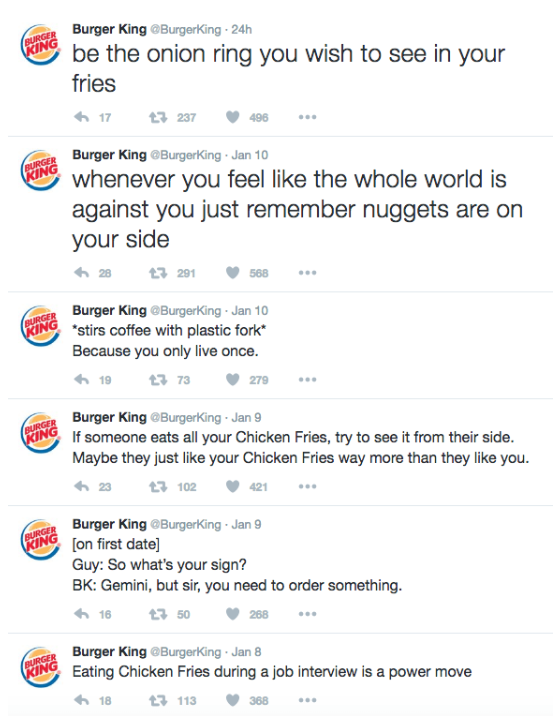
Memes, one-liners, and short comic videos can go MILES with your audience. Many companies today shy away from using humor to market their products or brands because they don’t believe that it takes away from the professionalism of who they are or are trying to be. We need to break down this belief that a company cannot be professional and fun. We could give you hundreds of examples of companies that do humor well, but one of our favorite examples is Amazon’s recent Superbowl video “Not Everything Makes The Cut” This video leaves you smiling as it depicts the various items that could be made into an “Alexa object” and how they could go wrong – not only making you laugh but also realizing on a new level why Alexa is so great, and how you could use it in your house. Another great example is as simple as Burger King’s many tweets – at times, they will poke light fun at their various fast food competition, and other times, they are just making witty remarks about YOLO(you only live once) or eating chicken fries during a job interview. This humor is relatable, entertaining, and fun to read, watch, and share. Making people laugh is always a good idea, no matter what company or industry you are involved in.

industry content marketing

Utilize Social Trends: Capitalize on already viral or popular content

The internet has given the world the ability to create new viral trends that seem to be weekly. A recent trend across all platforms is the legendary “Git Up Challenge,” where people post videos of themselves dancing a specific routine to the unique and recently released song “The Git Up” by Blanco Brown. Instantly, you had everyone from cowboys to news anchors doing the git up challenge. The Mobile Police Department of Alabama decided to join in by recreating their version of the already viral trendClick here to watch the video. This video has over 25,000 Facebook shares and 3,000 comments within the short time that it has been posted. Not only has this department made itself accessible, but these officers won the hearts of their community and country just by being willing to join in with a trend and having a good time with it. Capitalizing on trends doesn’t have to be hard; it could be posting a company update or sharing a fun trending video, or you COULD go as far as to make your remake or even a “response” video to the trend. It could be just a meme or a blog that uses wordplay to reflect the movement. It might be true that these little inserts might not automatically drive your sales up, but rather, they allow for brand recognition, larger product audiences going forward, and the ability for your company to step up to the same level as the people you are trying to reach.

Personalization

share a coke campaign

The Share a Coke campaign is probably the most widely recognized content marketing campaign, and quite possibly the longest-running. The Coca-Cola company started the campaign in 2011, over 8 years ago, in Australia. The idea was so well-received that they implemented it throughout the world. You can buy a Coke with your name on it, as well as buy a Coke with your friend’s name on it, to share with them (which is the whole idea behind the campaign). You can go as far as to order a personalized Coke bottle with your name on the Coca-Cola website, getting a discount if you buy an entire personalized pack. Personalize your product if you are able, to make it something that people not only want to buy for themselves, but they want to buy and share with all their friends.

Invest in Visuals: video, photography, etc.

Let’s be honest, good content marketing can go a long way without flashy videos, fun graphics, and perfect images…but they sure help!!! Set your business apart from your competition by investing in yourself, investing in your services, and in your business. Hiring a professional to create visuals that will accurately represent your company as it is now, as well as where you want to go. We all know that humans are visual beings, and having content that assists, promotes, and maximizes that specific element of who we are will only help your business grow.

Make it Community Oriented: Leave people feeling good about buying your product

TOMS is a well-known apparel company that offers a “One for One” project. For every pair of shoes that you buy, TOMS will donate a pair of shoes to someone who is in need – this campaign is not only extremely positive and aimed at giving back, but it’s the perfect “feel good” motivation for someone to pay the few extra bucks to buy themselves the new pair of shoes they’ve been wanting while still giving back to the 

Toms One For One

community and world. This could be adjusted personally to your business however you like, if you are a coffee shop you could give 10% of each cup of coffee bought to an animal shelter, or if you are a mechanic you could choose a charity of your choice to come set up at your shop all day and make donations for every oil change, tire rotation, or new tire job that comes in. The possibilities are endless for any company.

Give something away for FREE

This is a no-brainer, but we want you to expand your horizon of thinking…don’t limit your giveaways to your goods or services, these are good and you should facilitate giveaways of your goods and services, but think about giving away some company merch, or better yet, put together themed giveaways. Here is a great giveaway we saw put on by Patriot Jack’s Outfitters on Facebook. They put together an awesome “sweet summertime” giveaway with a Yeti cooler, a watermelon Yeti cup, a hat, and air fresheners. They had over 21,000 shares, 26,000 comments, and 23,000 reactions. Think about the audience they reached and the exposure they received just for putting together a simple little basket that was most likely valued at less than $300. Put your twist on it, and do a spring, summer, fall, and winter giveaway – the options are endless when it comes to your creative mind. 

giveaway content marketing

So, there you have it, we just gave you SEVEN different ways to make sure you’re benefiting from content marketing in your industry. Completely boiled down, a successful content marketing strategy is all about getting creative. It’s standing out from your competition in a way that helps people remember you. No matter what industry you are in, or what your company values are, there are ways to make your business one to be remembered.

Content marketing isn’t easy for everyone, getting the right content in front of your audience that really helps portray your company in the best possible way can be hard – let us help! We offer services such as blog management, content writing, social media management(like all pages), and more to ease up some of the pressure when it comes to content marketing for your business. Contact us today to learn more about what marketing strategies we can put into place for you today!

Contact us today to learn more about what marketing strategies we can put into place for you today!

Connect With Us

Facebook
Twitter
YouTube
Pinterest
LinkedIn
Instagram

Categories

Recent Posts

Archives

We Like Big Data – How Your Website, Big Data, & SEO Work Together

big data

Do A Site Analysis & Find Your Big Data

Google Stats, Analytics, and Search Console Oh My...

We like big data and we cannot lie. Big data has become an invaluable resource to search engine marketers in the industry today. Big data by definition in the dictionary is, “extremely large data sets that may be analyzed computationally to reveal patterns, trends, and associations, especially relating to human behavior and interactions.” Big data did not make its large entrance into the marketing world until about 2 or 3 years ago, changing search engine optimization forever! Big data and SEO now go hand in hand!

Website Content Is More Than You Think

Many people think of websites as solely content, which is true, but over the past 2-3 years, Google has adjusted the way they look at web content, rather than looking at it as a large entity of information, Google now takes the information from your website and breaks it our into little sections of data. With these pieces of data, it becomes easier to create those large data sets that we can in turn analyze to better business search engine optimization. So, our website content turns into data, but how do those jumbled numbers and information pieces benefit marketing efforts? Big data, as stated above, reveals patterns, trends, and more valuable information about human behavior and interactions, captured from the web. This is one of the most valuable tools when it comes to your marketing strategy – why you might ask?

data

The ability to analyze a set of extremely specific stats and accurately predict what your users want to know, what questions they will ask, as well as what time they will search for those answers is a priceless skill when it comes to getting your business across to the right person at the right time. With data, you can answer those questions from actions that users have taken on your website. Great, but how does that affect SEO? SEO for most businesses, is all about conversions. There are many types of conversions and depending on your business goals, there could be several that you want to track. Businesses want the right people to see their products at the right time, buying time. Conversion is everything to a business, it’s how they make a profit as well as stay in business long term! Utilizing big data makes it easier to predict who, what, when, and where your website needs to be, say, advertise, and when to do all of the above!

Google is the largest supplier of big data for companies today, with many free tools that businesses can utilize to help make their websites better, more relevant, and have a better user experience. Specifically, Google Analytics and Search Console are two tools that work seamlessly together providing both historical information as well as current, making it simpler to predict trends moving forward.

Google Analytics

Google Analytics is a great tool to help you gain insight into your website and a necessary tool to help you get a hold of some important big data that can help your search engine optimization efforts greatly. Analytics, once set up properly offers you valuable insight into your website, website visitors, where your visitors came from, and where they are going. This Google tool can also keep specific track of eCommerce insights as well as conversions, and behavior paths of website visitors. If you are not utilizing Google Analytics on your website, today is the day to get it set up and start analyzing the data, STAT. You can find a detailed step by step instructional on how to get analytics up and running here.

Google Search Console

Google Search Console (formerly Webmaster Tools) is another great resource that can exponentially give you great input into your website and what improvements need to be made. While this is a free resource you will have to go through the installation process for your website here. The search console provides great information in regard to backlinks, user search queries, landing pages, mobile usability, and more! These insights will help you improve your user experience, keyword focuses, and backlinks if analyzed and looked at properly. If you need help getting search console set up and running for your website, take a look at the following guide here.

social media marketing grand rapids

Social Media, Big Data, and SEO

Don’t forget the importance of social media when it comes to big data and your SEO! Over the last few years, Google has observed, tracked, and tested the enormous impact that search engine optimization and social media can have on business and website traffic. We see today how much of an impact social media plays on business ranks in search engines. Don’t be satisfied with only the information of sessions, engagements, and page views to see how well you are performing, but rather you should analyze all information and data trends throughout all of your big data to make the most specific plan for your company. In turn, you will see positive numbers and trends in various metrics, not just sessions, engagements, and page views as a result of intentional and proper digital marketing. This will allow you to tailor your marketing strategy all the more for your customers encouraging more conversions and helping you get your content to the top of the search engines!

Although big data makes it easier and more accessible to access the stats that truly can change your search engine marketing game, not all marketing professionals have the skill and ability to read those stats in a way that benefits their business – and if we are honest, all marketing professionals have constant room for growth.

We here at Spectrum Net Designs love big data and SEO and are committed to continual learning and pushing ourselves to be better and understand more about each of our clients and who they are. We regularly use Google Analytics, Search Console (formerly Webmaster Tools), and other informative statistics to do our best to predict what next month will bring for our clients. If you need more information on our Search Engine Optimization services or have questions about how big data can help your business; contact us today!

If you need more information on our Search Engine Optimization services or have questions about how big data can help your business

Do You Have a Social Media Marketing Strategy?

Do You Have A Social Media Marketing Strategy?

3 simple social media marketing tips for your Marketing Strategy in 2019

Do you have goals set up for your 2019 business year? What about social media marketing goals? Even if your answer to these two questions is ‘no’, it’s not too late to start! In the U.S. alone as of 2018, over 77% of the entire population has a social media profile. What an amazing platform you have to advertise your business…but, how do you begin?

We’ve decided to provide you with a few basic social media marketing tips to help you reach your company’s success on social media – once you’re done reading, you’ll have everything you need to create your own personal Social Media Marketing strategy for this coming year. To better create a social media marketing strategy, it’s a good idea to understand the purpose of the plan, who your audience is, and why it’s important to create goals for your platforms. Developing a social media strategy is important because we all know how fast time can get away from us, and marketing isn’t always the first thing on our priority list, your social media marketing plan will be an outline that will make it easier to have something to stick to so that you don’t lose sight of your goals for the year and also when you’re in a pinch of time, and are having some problems knowing what to post or how to show off your business, you have a game plan to keep pushing.

Set Business Goals...

When you start your own social media marketing strategy for your business, the first and most important thing that you can do is set your business goals. Setting goals for your business will give you something to work towards over an extended period…it will help you stay on track and not lose sight of what you are trying to accomplish. Whatever the goal is, make sure that it reflects your business properly, and will ultimately get your business closer to where you want to be one or five years from now! The most meaningful & valuable metrics to watch include but are not limited to leads generated, web referrals, conversion rate, and post engagement. The goal doesn’t have to be complicated or long, just make sure that its time sensitive & lines up with your overall business goals.

social media statistics

Know Your Audience

So, you’ve got 2-3 good goals that line up with the direction your business is going, now what? Get to know your audience. Who are you marketing to? What are their interests, likes, and dislikes? How can you best appeal your product or service to that specific grouping of people? This is not only your CURRENT audience that you will learn through research & tracking your current client demographics, but also the audience that you want to attain! Think proactively, making sure that you are posting content for the people that you WANT to reach. This step is CRUCIAL in making sure that you are creating content that your ideal audience will engage with, share, like, post about, and follow. Check out this free guide to Facebook analytics to make sure you are getting the most out of your Social Media Marketing.

social media marketing

Not only is Facebook Analytics a great tool to use in order to get to know your audience better, but using tools like Google Analytics & Webmaster tools will also give you some great statistics to make sure that you are doing your absolute best to get your content to the correct people.

Gain Insight From Competitors

Okay, so you’ve started posting great content, for the audience you have & also want to attain in the future…is that it? NOPE! Now comes the competition! Pick 3 of your biggest competitors – chances are

good they are already on social media and maybe even knee-deep in efforts to win over the same audience you are…so, use it as a learning experience, watch what they are doing, what is working for them and what isn’t, researching your competition isn’t something you can do in one afternoon, it takes many weeks, if not months of following along, seeing what they are doing & what is working for them. This should help give you better insight into what you have to do to create your unique content to capture your audience. 

Okay, so there you are, 3 social media marketing tips & a few simple steps to get your social media marketing off to the right foot this year, so one last step to remember is: take your 2019 goals and crush them! Make this year the year for your business, and when you do, send us a message to let us know how we helped.

Take a look at Spectrum Net Designs marketing services including Social Media Marketing, Search Engine OptimizationContent Writing, & Blog Management

Need help with Website Development and Design to make sure that you are Marketing a brand you are proud of?

WE’RE HAPPY TO HELP!

Share this post

Sources:
https://www.statista.com/statistics/273476/percentage-of-us-population-with-a-social-network-profile/
https://blog.hootsuite.com/how-to-create-a-social-media-marketing-plan/

How To Start A Blog 101

how to start a blog

How To Start A Blog 101

Blogging Tips To Get Started...

Blogging popularity really begin in the early 2000s when individuals from around the US began to put their own commentary online along with links and other content.
Over the years, blogging has changed so much and has even become a way for many people to bring in a steady income with just their brain & computer. Starting a blog can seem overwhelming and intimidating to many people, so we want to help you with 5 steps to start blogging as we go into this new year.

NUMBER ONE:  Passion for your topic of interest: If you decide to begin a blog, the first and foremost thing that you need is a passion for what you’re writing about. The purpose of your blog is to connect with like-minded people about a topic that is interesting to both of you. You can share mutual experiences & opinions. The good & bad sides of whatever it might be, to help one another along.

how to start a blog 101

NUMBER TWO:  Choosing a theme: Choosing a theme and design for your blog is one of the next things you can do to improve your user experience. 

A good blog reader is going to absolutely be drawn to your content, but humans, being as visual as we are, will judge a website within the first 2 minutes of being on it based on design, layout, and other visual aspects. Many of these judgements are in our subconscious and we don’t even know that they are going on.
“Good design builds trust.”

NUMBER THREE: Keep your blog simple…and mobile-friendly! Simplicity is key when it comes to your audience….and remember, you can ALWAYS re-expand on a blog topic later…which can also help with your organic SEO & also give your dedicated readers something to look forward to. On top of that, keeping your blog responsive & making sure that your readers can read anywhere will benefit you & your readers greatly! https://search.google.com/test/mobile-friendly Check out Google’s mobile-friendly test to make sure that your blog can be accessed anywhere!

NUMBER FOUR: Let your readers get to know you- It’s important to create your about me, contact me, & other pages…and that goes for your blogs too! Share some personal information about your life…readers, as they fall in love with your ideas, wit, and personality, will want to genuinely get to know you better as the person behind the blogs. Providing the basic info for your readers will provide a much more personal connection from them to you, and allow them to invest more in what you do.

NUMBER FIVE: Lastly, but not least, start writing! Start getting good, quality, unique content out there for people to read. Make sure that’s content that is unique to YOU, make sure it shares who you are, and why your opinion & words are not only valuable but different than everyone else’s.

Need Help Starting Or Maintaining Your Blog?

WE’RE HAPPY TO HELP!

Connect With Us

Facebook
Twitter
YouTube
Pinterest
LinkedIn
Instagram

Categories

Recent Posts

Archives

New Facebook Templates Customized for Your Business

Now you can choose your Facebook page template based on the genre of your business.

What are the new page templates?

Standard

Good for all Page types, with buttons and tabs to help showcase what’s important to you.

Standard Facebook

Business

Designed to help you manage your business, including ways to post jobs and special offers.

Business Facebook

Venues

Designed so you can highlight useful info like your venue’s hours, location and upcoming events.

Venues Facebook

Nonprofit

Designed to highlight your cause and encourage people to fundraise and donate to your nonprofit.

Politicians

Designed to help politicians reach their supporters and communicate their message.

Politicians Facebook

Services

Designed to help people find your services and get in touch.

Service Facebook

Restaurants and Cafes

Designed to highlight photos and important info about your menu, hours and location.

Restaurants Facebook

Shopping

Designed to showcase products and make it easy for people to shop online.

How are the templates different?

Facebook has developed new Facebook page templates for your Company Page, depending on its use. These page templates range from Standard (original) to Business to Shopping. There is a new layout for almost any sort of business, and each template differs by changing the tabs it shows on the Page. For example, a Non-Profit template would have a “Donate” tab front and center where people can easily give to your organization.

Is this a good or bad change?

Despite some confusion as to how to change templates, what template to use, and whether the template for your company is the right one, these new templates have been extremely helpful to most companies looking to enhance their Facebook page. Now, tabs fit a person’s specific needs. Nevertheless, change can be difficult. Now the page’s owner must relearn where everything is placed, what tabs are shown, and what content the audience can see. This can be a big step, especially for businesses with a lot of content, like restaurants and non-profit organizations. Once the change is made, though, you can always return to the standard template it was originally on, but who knows, maybe you’ll like it! There’s only one way to find out.

Can I still edit the tabs on my Professional Facebook page?

Once you change the layout of your Page, you also have the option to edit the tabs. Adding, dropping, and changing the tabs on your page gives you the freedom to make your page personal and unique. No more repetitive pages that all look the same! All these changes make us wonder, what will Facebook do next?

Top 5 Reasons Blogs are Beneficial for Your Website

Why Does My Website Need A Blog

You, as a business owner, have probably thought about doing a blog, and we are here to show you how blogging helps SEO! The idea may have crossed your mind, but then quickly left for the following reasons: First, a blog is work. Even if it’s just a couple of paragraphs a month, it takes effort and concentration. Secondly, a blog is time-consuming. You have to come up with an idea and somehow put that idea into words. Not to mention then you have to actually put it on your website. Who has time for all that? Lastly, what’s the point? It’s not like anyone is going to read it….right?

While a blog can take time and effort, the impact a blog can make is worth it. It sounds crazy, but blogs are what make a site known to the public. Blogs are beneficial. How? Blogs impact your SEO big time. Your site can fly up the ranks even if you post a blog every couple months or so. Here are some reasons why your blog can make a difference to your site traffic and ranking.

Fresh Content

One of the main things that search engines look for is fresh content. Your website’s pages probably don’t change that often. This is why a blog can make a world of difference. You will be steadily adding new, unique content at your own rate. When a search is performed by a user, search engines will pull the freshest and most relevant content to the top. Having regular updates and posts signals to search engines that a site is being active and updated regularly. This encourages them to crawl the site more often, which can lead to quicker indexing. By blogging, you put yourself out there as an expert in your specific field.

Popularity

Popularity

As your blog gets more traffic, it is constantly clicked on and shared. This will help it move up in search engine rankings. If you provide good, quality content, your readers will want to share it with others. How do you provide good, quality content? Be unique, provide answers, and share your blog as much as you can. Social media and backlinks will help spread the word and act as endorsements of your content if you’re offering quality information. With more popularity, you also get the attention of search engines, showing that your blog is offering trustworthy information, which people are gravitating towards. 

Backlinking

When other people link to your blog, that helps your ranking immensely. It creates an opportunity for getting pages indexed quicker. Search engines crawl backlinks for new content, which could improve your chances of getting indexed and more visible quickly. Make sure that you are linking with good quality sites; otherwise, Google will notice, and penalties will be applied. Use backlinks as a way to build relationships with similar companies; this will help you both provide different avenues for more people to discover the information. 

Backlinks

Social Media

If you connect your blog to social media like Facebook, Twitter, and other accounts, Google will notice and take that into account when ranking. It is a great way to drive traffic and feed the information to more people. Social media will also allow you to grow brand recognition and create a name for yourself.  Also, social media is a great way to get your company and business out there, especially for local SEO. Using social media and adding on local hashtags, locations, and other local businesses will open up more people to your posts. 

Indexed Pages

One of the most important reasons to have a blog is the fact that each post counts as a new page on your site. For Google to index a page, the page needs to be at least 300 words, preferably more. Reblogging, short posts, and duplicate content will not help when you want to boost your SEO.

Indexed Pages

For all these reasons and more, you can see how blogging helps SEO and is essential for ranking high in Google. According to Hubspot, having a blog will increase your website traffic by 55% to those sites that do not have a blog. This is why so many companies are starting blogs and posting their content.

Don’t have time? Have writer’s block?

Let us help you! Spectrum Net Designs can take care of your blog to help boost your SEO!


Give Us A Call Today!